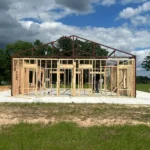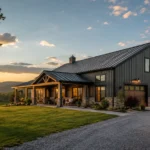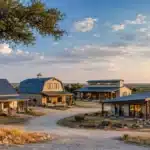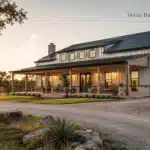
Choosing a barndominium foundation in Texas is one of the earliest decisions in a build and one of the hardest to change later. The three main options are a concrete slab, a pier and beam system, and a basement. Each one handles Texas soil, moisture, slopes and flood risk differently, and each has a different effect on cost, comfort and maintenance. This guide explains how each foundation works, where it fits best in Texas and what should drive the decision for your property.
Why the Barndominium Foundation Matters So Much in Texas
A barndominium puts the weight of a steel or post-frame structure, a large roof and often a heavy shop floor onto the ground. The foundation has to carry that load evenly and keep the frame stable as the soil underneath changes through wet and dry seasons.
Texas makes that harder than many states. Large parts of the state sit on expansive clay that swells when wet and shrinks during drought. Other areas have shallow limestone, sandy soils with a high water table, or caliche. A foundation that performs well in one region can struggle in another.
The foundation also ties into the rest of the building. Column anchors, slab thickness for shop loads, plumbing layout and finished floor height all depend on it. That is why experienced barndominium contractors in Texas treat the foundation as part of the structural design rather than a separate concrete job.
The Three Main Barndominium Foundation Types
- Concrete slab: a reinforced concrete slab poured directly on prepared ground, often with thickened edges and beams.
- Pier and beam: the home sits on beams supported by piers, with a crawlspace between the floor and the ground.
- Basement: a full or partial below-grade level with concrete walls and a slab floor.
Within each type there are variations, such as post-tensioned slabs, slabs supported on drilled piers, and walkout basements on sloped land. The right choice depends on the site, not on a general rule.
Slab Foundations for Barndominiums
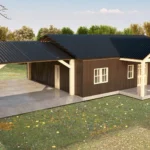
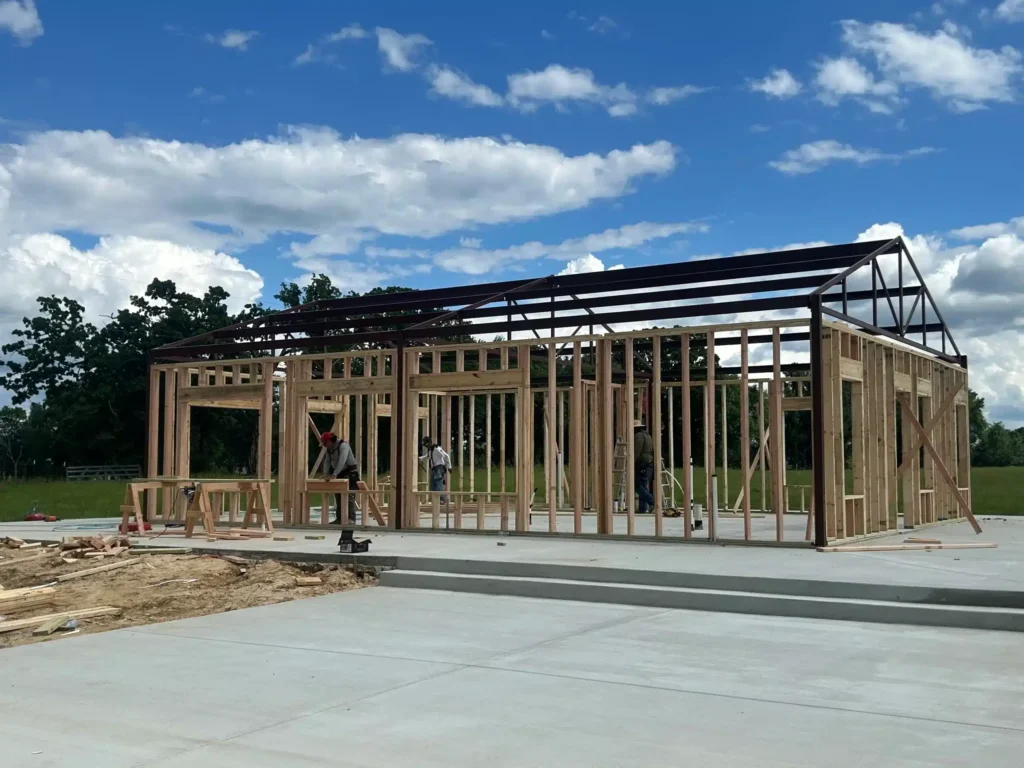
A slab is the most common barndominium foundation in Texas. It provides a solid, level base for both living space and shop areas, and it pairs well with the open, single-level layouts many owners want.
How a Barndominium Slab Foundation Works
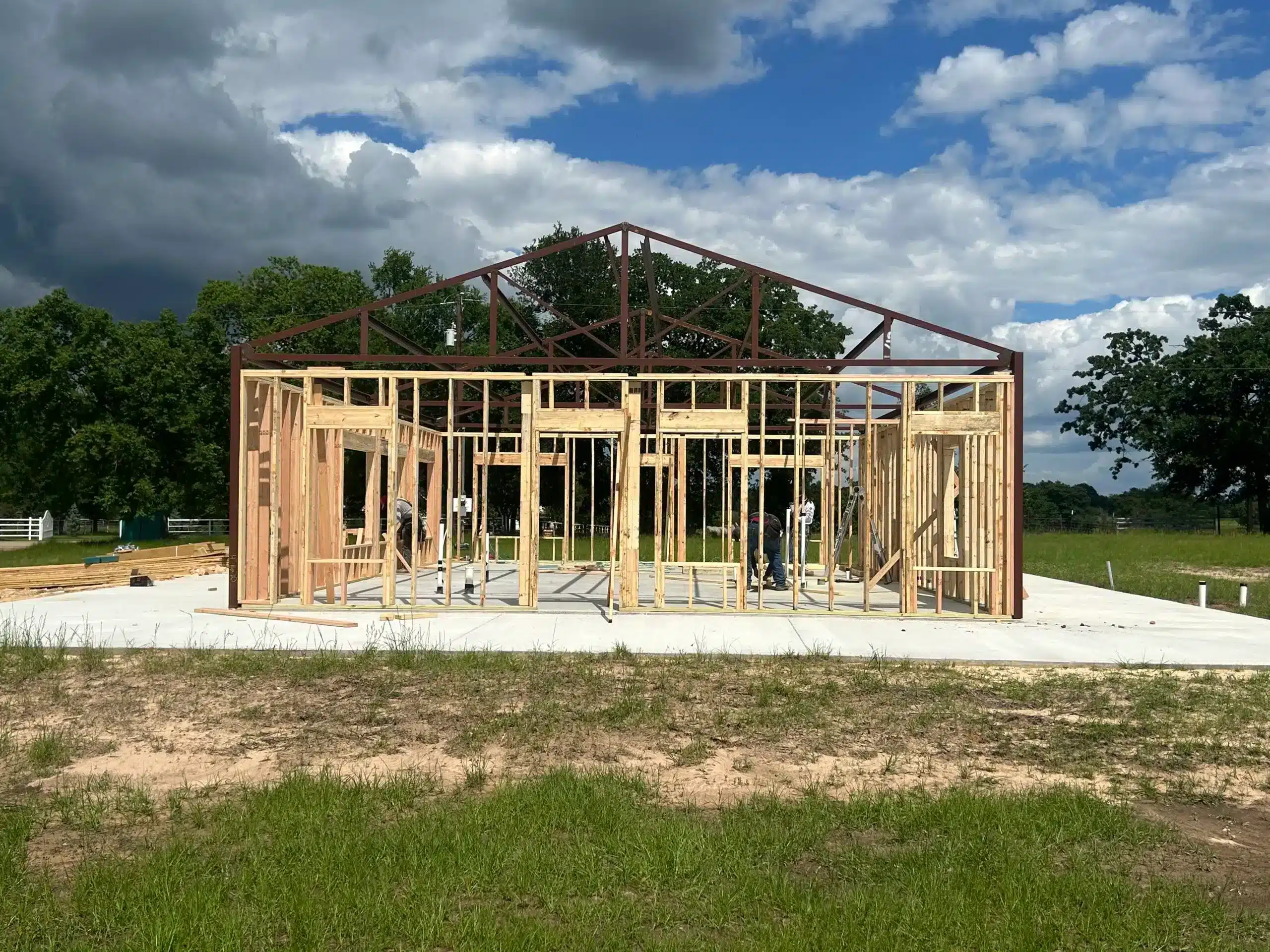
The site is graded and compacted, then the slab is formed with perimeter beams and interior beams where loads concentrate. Reinforcement is placed, plumbing is roughed in, and the concrete is poured. Steel columns are anchored to the slab or to footings designed for the frame.
Two slab types are common on Texas clay:
- Post-tensioned slab: steel tendons are tensioned after the concrete cures, which helps the slab resist cracking and movement on expansive soil.
- Conventionally reinforced slab: rebar is placed before the pour, with beam depth and spacing designed for the soil conditions.
On highly expansive soil, engineers may also support the slab on drilled piers that reach more stable ground below the active clay layer.
Pros of a Slab
- Usually the most cost-effective option for barndominiums
- Strong, level surface for shops, garages and equipment
- No crawlspace for moisture, pests or rodents
- Works well with open floor plans and single-level living
Cons of a Slab
- Plumbing under the slab is harder to reach for repairs
- Sensitive to soil movement if not designed for expansive clay
- Sits close to grade, which matters on flood-prone or poorly drained land
Slab layout also affects the home itself, because plumbing locations are fixed once the concrete is poured. Finalizing Texas barndominium floor plans before the slab is formed avoids expensive cutting and patching later.
Not sure which foundation suits your Texas land?
Pier and Beam Foundations for Barndominiums
A pier and beam foundation raises the floor above the ground on concrete piers and beams. It is common in older Texas homes and is used today where elevation, access or soil conditions make it the better choice.
How Pier and Beam Works
Piers are drilled or set into the ground at engineered spacing, often to a depth below the most active soil layer. Beams span between the piers, and the floor system sits on the beams. The crawlspace underneath gives access to plumbing, wiring and ductwork.
Pros of Pier and Beam
- Raises the living floor, which helps on flood-prone or low-lying sites
- Easier access to plumbing and utilities for repairs
- Can be adjusted or re-leveled if soil movement occurs
- Adapts well to sloped lots
Cons of Pier and Beam
- Typically costs more than a basic slab
- Crawlspace needs ventilation or encapsulation to control humidity
- Less suited to heavy shop floors and vehicle areas
- Wood floor systems need protection from moisture and pests
Many barndominiums that use pier and beam for the living area still pour a slab for the attached shop or garage. That combination gives elevated living space and a heavy-duty floor where vehicles and equipment sit.
Basement Foundations for Barndominiums in Texas
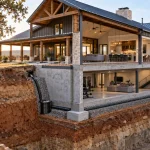
Basements are much less common in Texas than in northern states. The reasons are practical: expansive clay puts pressure on below-grade walls, many areas have a high water table, and shallow limestone in parts of the state makes excavation expensive. Texas also has a shallow frost line in most regions, so the deep footings that make basements a natural add-on further north are not required here.
That does not mean a basement is impossible. Waterproofing, drainage, wall design and soil conditions all decide whether one makes sense, and the detailed answer to can a barndominium have a basement covers those factors for Texas sites.
When a Basement Can Work
- Sloped lots where a walkout basement uses the natural grade
- Sites with a geotechnical report showing manageable soil and groundwater
- Owners who want a storm shelter, storage or extra living space below grade
Drawbacks of a Basement
- Usually the most expensive foundation option
- Requires serious waterproofing and drainage design
- Higher risk on expansive clay or high water tables
How Texas Soil Shapes the Best Foundation for a Barndominium
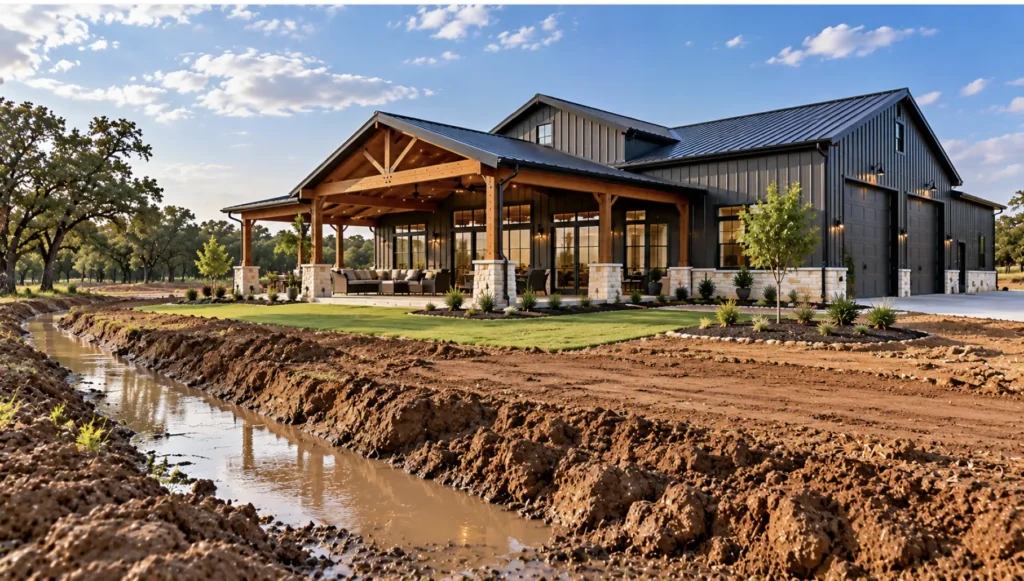
Soil is usually the single biggest factor in choosing the best foundation for a barndominium. This section is a short overview, since the full breakdown of Texas soil types and how each affects foundations is covered in a dedicated guide.
- Expansive clay: common across the Blackland Prairie and Gulf Coast. Usually calls for post-tensioned slabs, deeper beams or slabs on drilled piers.
- Limestone and rock: common in the Hill Country. Offers strong bearing but makes excavation for piers or basements harder.
- Sandy soils: found in parts of East Texas. Drain well but can sit over clay layers or a high water table.
- Caliche: common in West Texas. Hard to excavate and needs testing before design.
The Austin to San Antonio corridor shows how quickly conditions change. Builders working on barndominiums in Central Texas can move from limestone in the Hill Country to expansive Blackland clay within a short drive, and the foundation design changes with it.
North Texas is one of the most demanding areas for slab design. North Texas barndominium builders regularly deal with highly expansive clay around Dallas and Fort Worth, which is why post-tensioned slabs and engineered beam layouts are standard there.
Every Texas barndominium should start with a geotechnical soils report. It measures how much the soil can swell and shrink, its bearing capacity and groundwater conditions, and it gives the engineer the data needed to design the foundation rather than guess.
Flood Risk, Drainage and Foundation Height
Flood exposure can change the foundation decision completely. On low-lying land, a slab at grade may not meet local floodplain requirements, while a raised slab or pier and beam foundation can lift the finished floor above the required elevation.
Before choosing a foundation type, check the property against FEMA flood maps and local floodplain rules. The guide to flood zones in Texas explains how flood designations affect where and how high you can build.
The Gulf Coast is a good example. Teams working as barndominium builders in Houston deal with flat terrain, heavy rain, expansive clay and floodplain rules at the same time, so finished floor height and site drainage are planned alongside the foundation itself.
Even outside mapped flood zones, drainage matters. Grade the site to move water away from the foundation, carry roof runoff clear of the slab edge, and avoid letting water pond against the building.
Need a foundation planned around your site?
Comparing Slab, Pier and Beam and Basement
- Cost: slab is usually the lowest, pier and beam is higher, and a basement is usually the highest.
- Expansive clay: engineered slabs and pier and beam both work when designed for the soil. Basements carry the most risk.
- Flood-prone land: pier and beam or a raised slab is usually the better fit.
- Sloped lots: pier and beam or a walkout basement can follow the grade.
- Shop and vehicle areas: a slab is the clear choice.
- Repair access: pier and beam is easiest, a slab is hardest.
For most Texas barndominiums, an engineered slab is the default because it suits open layouts and shop floors and controls cost. Pier and beam earns its place on flood-prone, sloped or highly expansive sites. A basement is a specialist choice that needs the right site to justify the cost and risk.
Common Barndominium Foundation Mistakes
Skipping the Soils Report
Designing a foundation without soil data is guesswork. On Texas clay, that guess can lead to cracked slabs, sticking doors and costly repairs.
Using One Design for Every Site
A slab design that worked on one property may not suit the next. Soil, slope, drainage and flood exposure all change the engineering.
Ignoring Shop Loads
Vehicle bays, lifts and heavy equipment need thicker slab sections and proper reinforcement. Plan those areas before the pour.
Poor Drainage Around the Slab
Water pooling at the foundation edge wets the clay unevenly, which is one of the main causes of foundation movement in Texas.
One way to avoid these problems is to keep design, engineering and construction under one contract. With a turnkey barndominium in Texas, the soils report, foundation design, frame anchoring and site drainage are coordinated by the same team instead of being split between separate trades.
Whatever foundation you choose, the work should be engineered for the actual site and built to that design. Reputable barndominium builders in Texas will explain why a foundation suits your property and what the soil and drainage data show, rather than recommending the same system for every job.
Conclusion
There is no single best foundation for every Texas barndominium. An engineered slab suits most builds because it handles shop floors and open layouts at a reasonable cost. Pier and beam is often the better fit on flood-prone, sloped or highly expansive sites, and a basement only makes sense where soil, groundwater and budget support it. Start with a geotechnical soils report, check flood exposure and drainage, and let that data decide the design. A foundation planned around the real site will protect the rest of the build for decades.
Frequently Asked Questions
What is the best foundation for a barndominium in Texas?
For most Texas barndominiums, an engineered concrete slab is the most practical choice because it supports shop floors and open layouts at a reasonable cost. On expansive clay, the slab is often post-tensioned or supported on drilled piers. Pier and beam can be a better fit on flood-prone or sloped land.
Can a barndominium be built on pier and beam?
Yes. Pier and beam works well for barndominiums, especially where the floor needs to sit above flood levels or the lot slopes. Many owners pair a pier and beam living area with a slab for the attached shop or garage, since vehicle areas need a heavy-duty concrete floor.
How thick should a barndominium slab be?
Slab thickness depends on soil conditions, building loads and how each area will be used, so it should be set by an engineer. Living areas and shop areas often need different designs, with thicker sections and deeper beams where vehicles, lifts or steel columns put concentrated loads on the slab.
Do barndominiums need footings?
Yes. Steel and post-frame barndominiums concentrate loads at the columns, so they need properly designed footings, thickened slab sections or piers under those points. The size and depth come from the structural design and the soils report for the site.
Why are basements rare in Texas barndominiums?
Expansive clay, high water tables in some regions and shallow limestone in others make basements costly and risky to build in much of Texas. Most of the state also has a shallow frost line, so deep footings are not required. Basements can still work on suitable sites, such as walkouts on sloped land with favorable soil.