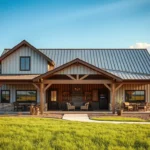
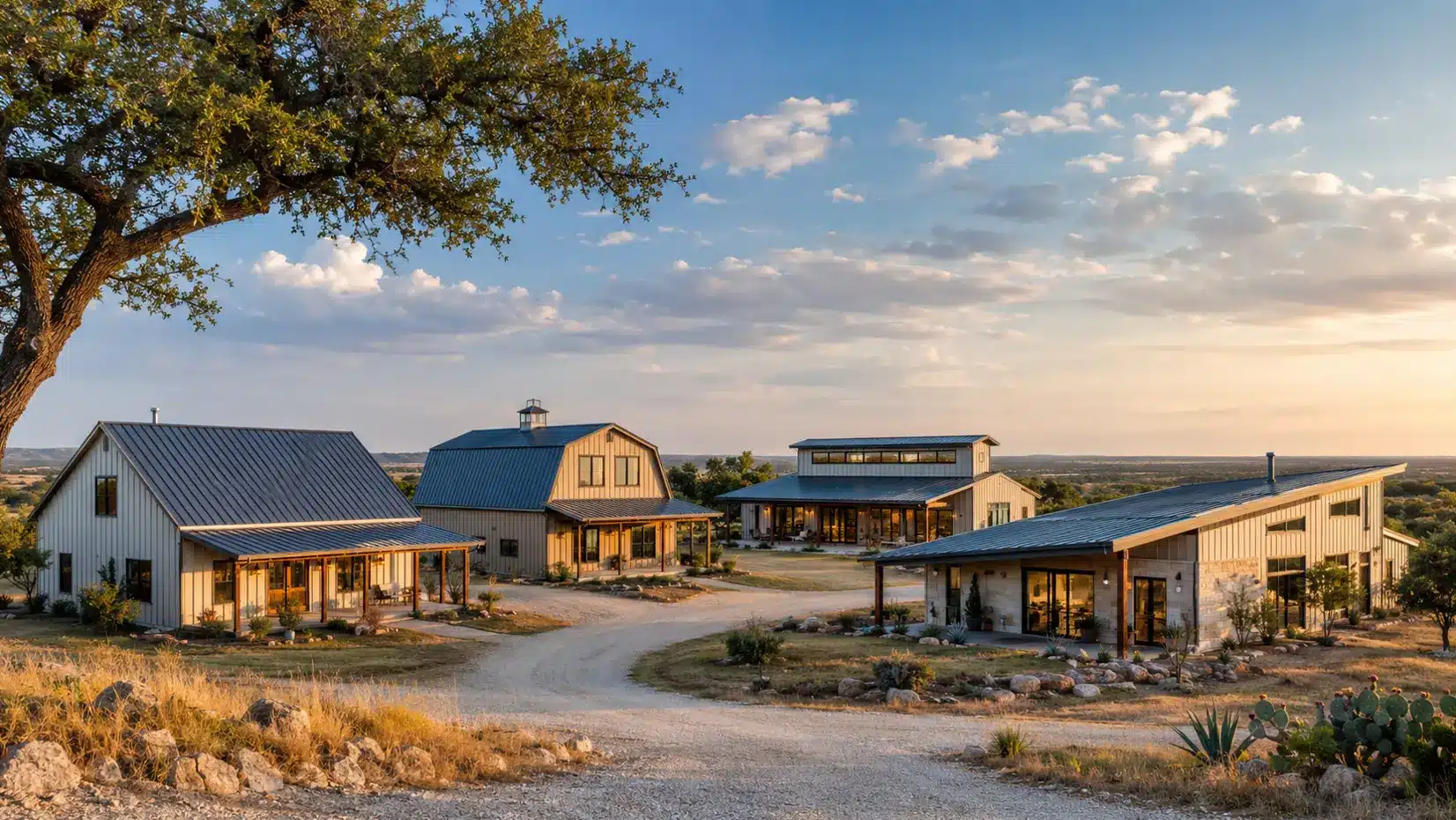
The roof on a barndominium does more work than the roof on a typical house. It covers a larger, more open structure, it ties directly into the steel frame, and in Texas it has to survive triple-digit summers, sudden hailstorms, and wind gusts that can exceed 100 mph in a single storm season. Picking the right roofing material and style affects your home’s durability, energy bills, insurance costs, and how it looks for decades to come.
This guide walks through the main roofing materials, the most common roof styles, and then narrows in on what actually holds up best for Texas living.
What Makes Barndominium Roofing Different
A barndominium starts as a post-frame metal building, so the roof is structurally part of the shell rather than a separate system added after the walls go up. That changes a few things compared to a conventional stick-built home:
- The roof and wall panels are often installed as one continuous system, which affects how materials are chosen and priced
- Open floor plans and high ceilings mean less interior structure to absorb sound and heat, so the roof itself carries more of that load
- Roof pitch and panel type directly affect how well the structure handles wind uplift and water shedding
- Because the roof is visible from grade on most barndominium designs, it plays a bigger role in curb appeal than on a home with a steeper, less visible roofline
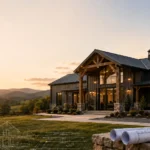
Metal barndominium construction ties the roof and wall panels together as one structural system, which is part of why the roofing decision carries more weight here than it would on a conventional stick-built home.
Barndominium Roofing Materials Compared
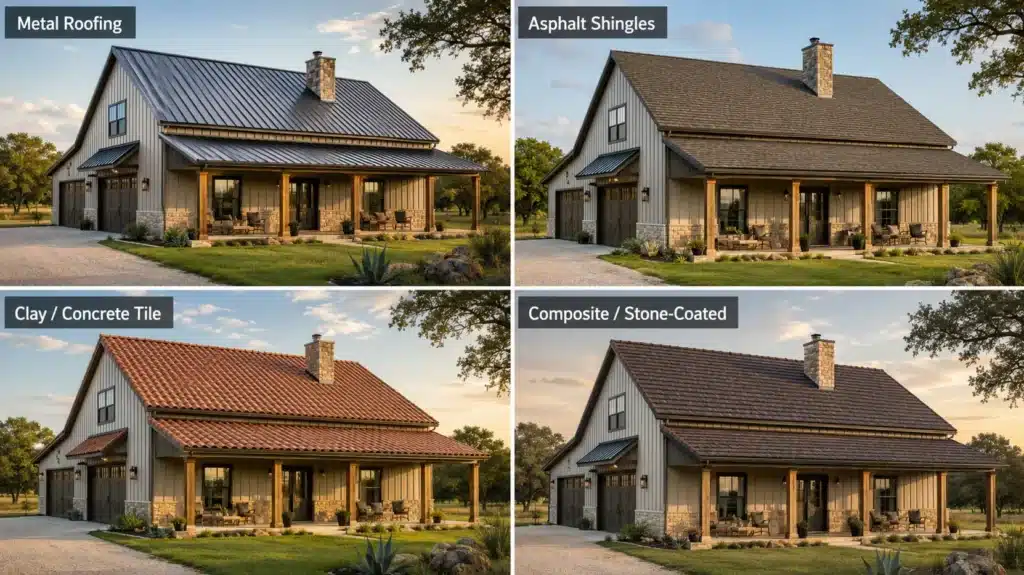
Material is the first decision, and it drives most of the cost, maintenance, and lifespan differences. Here is how the main options stack up.
Metal Roofing
Metal is the most common roofing material on barndominiums, largely because it pairs naturally with steel-frame construction. Standing seam panels, corrugated panels, and stone-coated steel are the three most common profiles.
- Lifespan of roughly 40 to 70 years, depending on the metal type and coating
- Resistant to fire, rot, insects, and mold, which keeps long-term maintenance low
- Reflective finishes reduce heat gain and can lower cooling costs
- Lightweight compared to tile or slate, which reduces structural load
- Higher upfront cost than asphalt shingles, though the lifetime cost is often lower
Asphalt Shingles
Asphalt shingles remain the most affordable and widely available roofing option, and many barndominium owners still choose them for budget reasons or to match a more traditional home look.
- Lower upfront material and labor cost than metal, tile, or slate
- Easy to install and repair, with contractors available almost everywhere
- Wide range of colors and styles, including architectural and impact-resistant versions
- Shorter lifespan, typically 15 to 30 years depending on grade and climate
- More prone to heat-related wear, including curling and granule loss, in prolonged high temperatures
Clay and Concrete Tile
Tile roofing is less common on barndominiums but shows up in hot, dry regions where its thermal mass properties are an advantage.
- Excellent insulation value, helping regulate indoor temperature in hot climates
- Long lifespan, often 40 to 100 years depending on clay or concrete
- Heavier than metal or shingles, which may require additional structural planning
- Higher material and installation cost than most other options
Composite and Stone-Coated Panels
Composite roofing and stone-coated steel are designed to mimic the look of shingles, wood shake, or slate while adding durability closer to metal.
- Better impact resistance than standard asphalt shingles
- Reduces interior rain noise compared to bare metal panels
- Higher upfront cost than asphalt, though generally less than premium metal or tile
- Good option for owners who want a traditional look with better long-term performance
Would you like to speak to qualified barndo builder in Texas?
Common Barndominium Roof Styles
Once the material is chosen, the roof style shapes both the interior ceiling height and how well water and wind are handled. The most common styles include:
- Gable roof – two equal slopes meeting at a peak, the simplest and most cost-effective style, and the most widely used on barndominiums
- Gambrel roof – a shallow slope near the peak and a steeper slope on the sides, giving extra loft or storage space, closer to a classic barn look
- Hip roof – slopes on all four sides rather than two, which improves wind resistance and makes it a common choice in storm-prone areas
- Monitor roof – a raised center section with clerestory windows, popular for bringing in natural light on open floor plans
- Combination roofs – mixing styles, such as a clerestory paired with a bonnet overhang, to solve for both light and porch coverage
The right style depends on your Texas barndominium floor plans, since ceiling height, attic space, and porch coverage all interact with the roof geometry you choose.
What Actually Holds Up Best in Texas
Texas is not one climate. A roof that performs well in the Panhandle may not be the right call in the Gulf Coast humidity, and a roof built for Hill Country sun exposure needs different priorities than one built for Metroplex hail season. The state as a whole puts four demands on a roof:
- Extreme heat – long stretches above 100°F that soften asphalt and increase cooling loads
- Hail – common across North Texas and Central Texas, requiring impact-rated materials
- High wind – gusts during severe thunderstorms and occasional tornado activity that test uplift resistance
- Heavy, sudden rainfall – requiring proper drainage and moisture resistance to prevent leaks
Regional Differences Within Texas
Roofing needs shift depending on where in the state you are building:
- North Texas (Dallas-Fort Worth area) – frequent hailstorms and occasional tornadoes call for Class 4 impact-rated materials such as standing seam metal or architectural shingles
- Central Texas (Austin, Hill Country) – intense sun exposure favors reflective metal roofing or clay tile for their heat-regulating properties
- South Texas (San Antonio, Coastal Bend) – high humidity and heat make tile and treated composite panels attractive for their mold and mildew resistance
- East Texas – heavier tree cover and rainfall put a premium on proper drainage and moisture-resistant materials
Why Metal Roofing Leads for Most Texas Barndominiums
Across nearly all Texas regions, standing seam metal roofing consistently comes out ahead for barndominiums, for a few practical reasons:
- Standing seam panels use fewer exposed fasteners, which lowers long-term leak risk in high-wind areas
- Metal roofing rated for wind speeds well above typical residential requirements holds up better during severe thunderstorms
- Reflective coatings cut down on attic heat gain, which matters directly to summer cooling costs
- Metal resists the fire risk that comes with drought conditions in parts of the state
- The lightweight profile pairs naturally with the steel framing, avoiding the added structural cost of heavier materials like tile
Asphalt shingles are still a reasonable choice for owners prioritizing upfront cost over lifetime performance, particularly if impact-resistant or architectural-grade shingles are used. Clay tile performs well in the hottest, driest parts of Central and South Texas but comes with added weight and cost. Composite and stone-coated panels sit in the middle, offering better durability than standard shingles at a lower cost than premium metal or tile. Barndominium builders in Texas who work regularly with these materials can help weigh which one fits a specific site and budget.
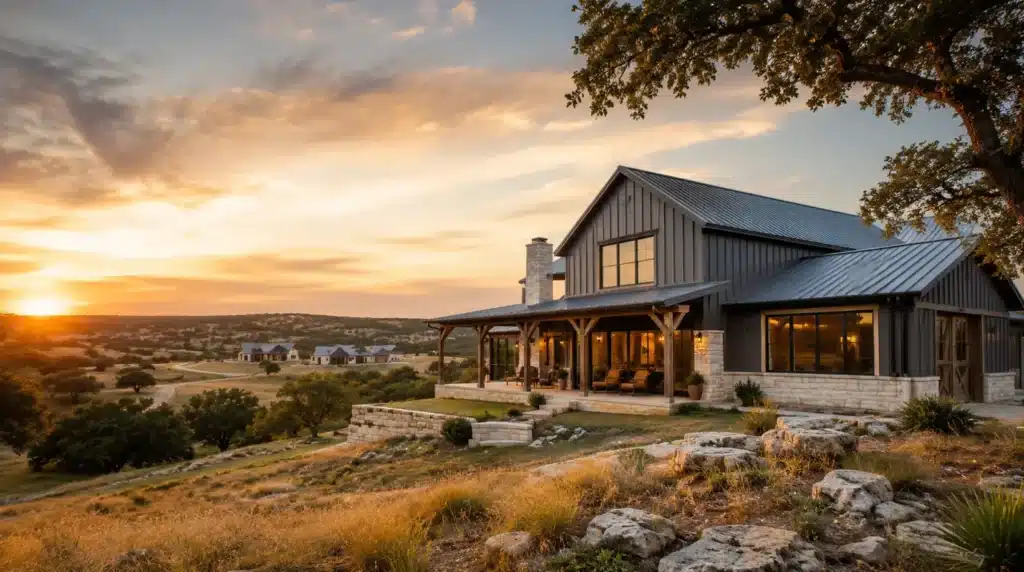
Maintenance and Cost Considerations for Texas Homeowners
Upfront price is only part of the picture. Maintenance needs and expected lifespan change the real cost of ownership over time.
- Asphalt shingles generally run lower upfront but need replacement every 15 to 30 years, sooner in high-heat regions with poor attic ventilation
- Metal roofing carries a higher installed cost but typically lasts 40 to 70 years with minimal upkeep beyond periodic inspections
- Tile roofing has the longest potential lifespan but the highest installed cost, and may require occasional repair of individual tiles after severe hail
- Composite and stone-coated panels fall in between, offering a middle ground on both cost and lifespan
Regardless of material, a few maintenance habits extend the life of any Texas roof: annual inspections after storm season, keeping gutters and drainage clear, and confirming proper attic ventilation to reduce heat buildup. These factors also play into overall Texas barndominium cost, since roofing represents one of the larger line items in a full build budget.
Common Mistakes to Avoid
A few missteps show up repeatedly in Texas barndominium roofing decisions:
- Choosing the cheapest shingle grade without accounting for how quickly heat and UV exposure wear it down
- Skipping impact-rated materials in hail-prone counties to save on upfront cost, then facing higher insurance premiums or storm damage later
- Underestimating the importance of proper attic ventilation, which affects both roof lifespan and interior comfort
- Assuming one roofing decision fits the whole state, rather than adjusting for the specific region and its dominant weather risk
- Not coordinating the roof design with the overall structural engineering, which matters more for a barndominium than a conventional home since the roof is integral to the steel shell
Want to discuss roofing options with a qualifeid barndo builder?
Working the Roof Decision Into Your Overall Build
Roofing is not a decision made in isolation. It connects to floor plan design, insulation strategy, and the broader construction budget. Reviewing options with an experienced custom home builder before finalizing plans helps avoid costly changes mid-build, particularly since roof pitch and panel type affect engineering requirements tied to wind load and snow load calculations used across the state’s building codes.
Conclusion
There is no single best roof for every barndominium, but for most Texas builds, standing seam metal roofing offers the strongest combination of durability, low maintenance, and energy efficiency against the state’s heat, hail, and wind. Asphalt shingles remain a reasonable lower-cost option, while tile and composite materials serve specific climate and style needs in certain regions.
The right choice ultimately comes down to your local weather risk, your budget, and how the roof fits into the rest of your build. Weighing these factors early, alongside your floor plan and overall construction budget, sets the foundation for a roof that performs well for decades.
Commonly Asked Questions
What is the best roof material for a barndominium in Texas?
Standing seam metal roofing is generally considered the best fit for most of Texas, since it combines wind and hail resistance with reflective properties that reduce cooling costs. The right choice still depends on your specific region and budget.
How long does a metal roof last on a barndominium?
A metal roof typically lasts 40 to 70 years, roughly two to three times longer than standard asphalt shingles. Actual lifespan depends on the metal type, coating, and how well the roof is maintained over time.
Are asphalt shingles a bad choice for a Texas barndominium?
Asphalt shingles are not a bad choice, but they wear faster under prolonged Texas heat and typically need replacement sooner than metal or tile. Impact-resistant or architectural-grade shingles perform noticeably better than basic three-tab shingles in hail-prone areas.
Does roof pitch matter for barndominiums in Texas?
Yes. A steeper pitch sheds rain and debris more effectively and can improve wind performance, while a lower pitch is common on simpler gable designs to help control cost. Pitch also affects usable attic space and how the roof handles heavy rainfall events.
How much does a barndominium roof cost in Texas?
Costs vary by material and roof size, with asphalt shingles generally on the lower end and standing seam metal, tile, or premium composite panels on the higher end. Getting a project-specific quote is the only reliable way to know your actual number, since roof pitch, panel type, and region all affect final pricing.