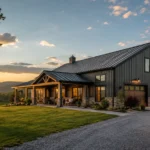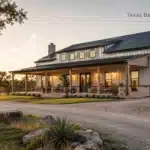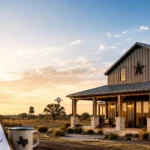
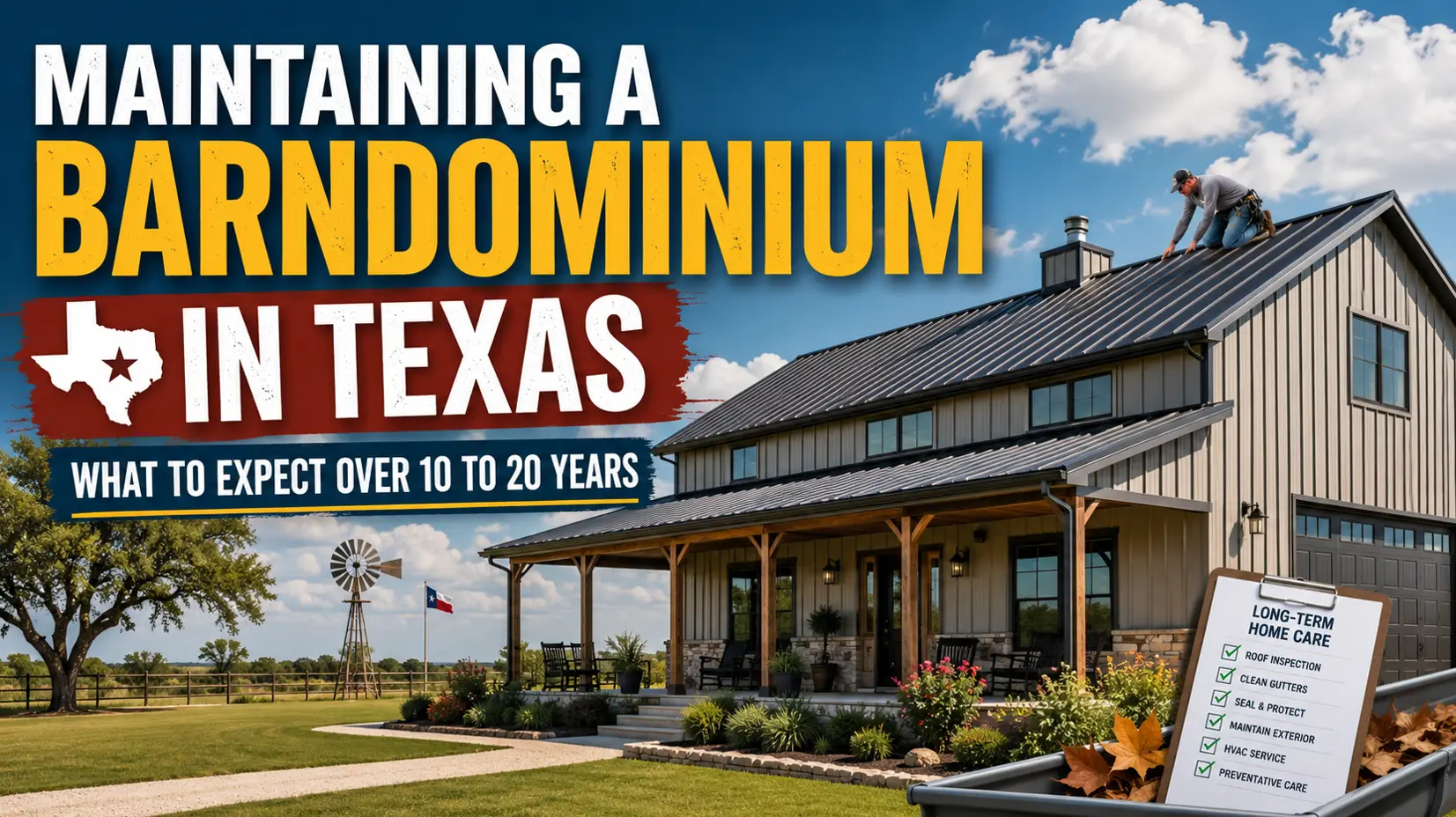
One of the most common questions from prospective barndominium owners isn’t about building costs or floor plans, it’s about what comes after. What does ownership actually look like five, ten, or twenty years down the road?
Barndominiums carry a well-earned reputation for durability, and a properly built one in Texas can last 50 to 70 years or more. But durability doesn’t mean maintenance-free. Texas weather, soil conditions, and climate all create specific maintenance demands that every owner should understand before they move in. This guide walks through what to expect, year by year and system by system, so you can protect your investment for the long haul.
Why Texas Conditions Shape Barndominium Maintenance
Texas isn’t one climate. The Hill Country, East Texas, the Panhandle, and South Texas each present different maintenance challenges, and what’s relevant in one region may be minor in another. Understanding this is the starting point for any realistic long-term maintenance plan.
Across the state, heat is the constant. Summers regularly push past 100°F, which puts sustained pressure on roofing, insulation, and HVAC systems. In East Texas and the Gulf Coast corridor, high humidity compounds this. Moisture becomes the primary threat, driving condensation inside metal structures when insulation or vapor barriers aren’t properly installed. In Central and West Texas, the soil itself is the variable. Expansive clay soils shrink and swell with rainfall cycles, which creates movement at the foundation level that needs to be monitored over time.
Wind is another factor that doesn’t get enough attention. Texas experiences everything from Gulf Coast tropical systems to severe spring storms inland. A barndominium built to the correct Texas wind load specifications for its county will handle these events well, but roofing fasteners and panel seals take incremental stress with each storm and need periodic inspection.
The Metal Roof: Your Biggest Long-Term Asset, If You Maintain It
A standing-seam or screw-down metal roof is one of the strongest arguments for building a barndominium in Texas. Metal roofs routinely outlast asphalt shingles by 20 to 30 years, and quality panels can perform for 40 to 70 years under normal conditions. That said, the roof system has components that need attention well before the panels themselves wear out.
The fasteners, sealants, and penetration points around vents, pipes, and skylights are where failures start. Thermal cycling, the expansion and contraction of metal through hot Texas summers and occasional hard freezes, causes fasteners to back out over time and sealants to crack at joints. Neither issue becomes a problem quickly, but both will cause leaks if left unaddressed.
A practical approach to metal roof maintenance in Texas looks like this:
- Inspect twice a year: spring and fall work well, bracketing the summer heat season
- Check all penetrations and ridge cap seals for cracking or separation
- Look for backed-out screws or loose panels, especially after major wind events
- Clear debris from valleys and gutters to prevent moisture pooling at panel edges
- Address any surface rust on exposed fasteners promptly with rust-inhibiting compound
The panel coating itself is worth understanding. Most quality metal panels come with a Kynar or PVDF finish that resists UV degradation and fading. In Texas sun, cheaper paint systems will oxidize and chalk within 10 to 15 years. If you’re building or planning a build, the panel coating spec matters as much as panel gauge, and it’s one of the details a thorough review of inspections for Texas barndominiums will flag if it wasn’t done right during construction.
HVAC Systems: The Component That Needs the Most Attention
In a Texas barndominium, the HVAC system works harder than it would in a comparable wood-frame home, not because the building is inefficient, but because the thermal dynamics of a metal structure are different. Large open floor plans, high ceilings, and metal panels that conduct heat all place more demand on mechanical systems, especially in summer.
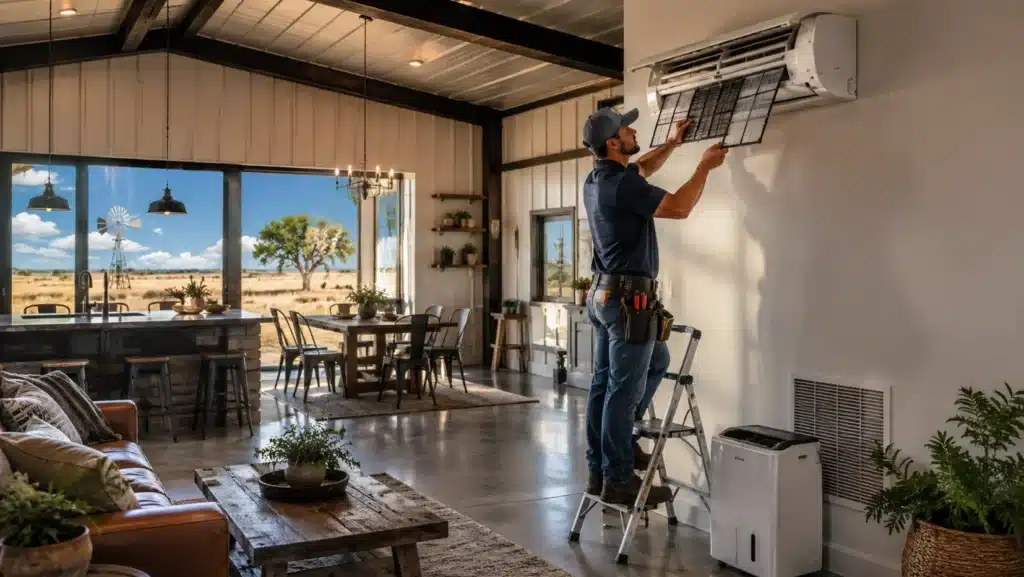
Many barndominiums use mini-split systems, which offer good zone control and efficiency. But mini-splits have specific maintenance requirements that homeowners often underestimate. Filters need cleaning monthly in heavy-use seasons, not annually. Condensate drains need to be checked and cleared regularly. A blocked drain in a humid East Texas summer can cause overflow damage to walls and flooring within days.
Over a 10 to 20-year period, HVAC maintenance in a Texas barndominium typically involves:
- Monthly filter cleaning or replacement during peak cooling seasons
- Annual professional servicing of refrigerant levels and coil condition
- Inspecting and sealing any ductwork annually if ducted systems are used
- Running a dehumidifier in humid regions to supplement the air conditioning. Standard A/C removes sensible heat but doesn’t always manage latent humidity effectively
- Budgeting for compressor or full unit replacement at the 12 to 15-year mark, depending on brand and maintenance history
Getting the HVAC sizing right from the start matters enormously for long-term performance. Undersized systems run constantly and wear out faster. Oversized systems short-cycle, which reduces humidity removal and drives up energy bills. A proper Manual J load calculation, based on your insulation spec, window efficiency, ceiling height, and Texas climate zone, is non-negotiable for any well-built barndo.
See if a Texas barndominium can have a basement and is that a good idea.
Insulation and Moisture Control Over the Long Term
Spray foam insulation is the standard in quality Texas barndominium construction, and for good reason. It air-seals while it insulates, addresses thermal bridging through metal framing, and creates a continuous vapor barrier that manages condensation risk. When installed correctly, it performs for the life of the building with no replacement needed.
The risk isn’t the foam itself, it’s what happens to it when the building is modified. Cutting through foam to run new wiring, add an outlet, or expand a wall creates gaps in the thermal envelope. Those gaps allow humid air to contact metal surfaces, which leads to condensation, rust on the interior frame, and in worst cases, mold in the wall assembly. Any modification to walls or ceilings needs to include foam repair in the affected area. Skipping this step is one of the most common barndominium build mistakes in Texas that owners only discover years later.
Moisture management is the maintenance task most specific to Texas conditions. In the humid east and coastal regions, a dehumidifier isn’t optional, it’s part of the building’s operational system. In drier West Texas, the focus shifts to managing the extreme temperature swings that cause condensation during cold snaps after hot days. Proper grading around the structure, sealed downspouts, and a functioning vapor barrier under the slab all contribute to keeping moisture out of the picture long term.
Want to talk to a barndominium expert in Texas?
Foundation Monitoring in Texas: What the Soil Does Over Time
Texas soils are notoriously variable. Expansive clays in North Texas and parts of Central Texas swell during wet periods and shrink during drought, creating cyclical movement at the slab edge. Sandy soils in other regions drain fast but can shift under load if not properly compacted during site prep. Understanding what your soil does is a prerequisite for building a stable foundation, and for knowing what to watch over the following decades.
A well-engineered barndominium foundation, whether slab-on-grade, post-tension slab, or pier-and-beam, is designed to accommodate expected soil behavior. But foundations still need to be monitored. Early indicators of movement include:
- Cracks appearing in interior drywall, particularly at door and window corners
- Doors or windows that stick, bind, or fail to latch properly
- Visible gaps developing between the floor slab and interior walls
- Exterior panel trim separating from the slab at grade level
Minor hairline cracking in a slab is not unusual and doesn’t indicate a structural problem. But cracks that grow, shift, or allow water intrusion should be evaluated by a qualified foundation specialist. Managing drainage around the structure is the most effective preventative measure available to an owner. Keeping water from pooling against the slab edge reduces soil movement dramatically. Those planning a build can read more about how Texas soil types affect barndominium foundations during the design phase, which is the right time to address these variables.
Owners building across different parts of the state face different foundation risks. North Texas barndominium builders typically work with some of the most challenging clay soils in the state, while builds in sandy or loam-dominant regions may see very little long-term movement. Local knowledge of county-specific soil profiles is one reason to work with a builder who operates exclusively in Texas.
Exterior Siding: Lower Maintenance Than Most Alternatives, But Not Zero
Metal siding on a barndominium doesn’t rot, doesn’t attract termites, and won’t need to be replaced every 20 years the way wood or vinyl siding will. But it does need attention to maintain its protective coating and resist surface corrosion, particularly in humid or coastal environments where salt air or sustained moisture increase oxidation risk.
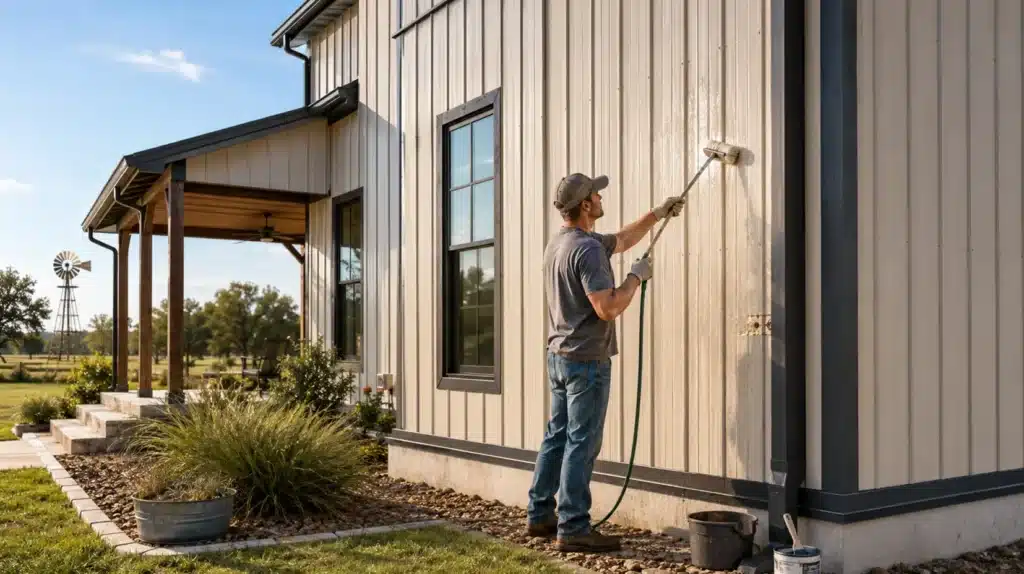
Annual exterior washing with mild detergent removes airborne contaminants that degrade paint coatings over time. Areas near the base of the building, where debris accumulates and moisture lingers, are the highest priority. Scratches or dents in metal panels should be touched up with matching paint to prevent rust from establishing at the exposed steel underneath.
The critical areas to check on the siding system aren’t the panels themselves, it’s the trim. Base trim, corner trim, and any trim running along the roofline are where water infiltration starts. Sealed trim that pulls away from the panel, or trim sitting in standing debris, will eventually allow moisture behind the panel system. Keeping these areas clear and sealed is straightforward maintenance that prevents expensive repairs.
Plumbing, Electrical, and Rural Systems Over 10–20 Years
Interior plumbing and electrical systems in a barndominium follow the same maintenance expectations as any other residential build. Water heaters typically last 10 to 12 years. Pressure-relief valves should be tested annually. PEX supply lines used in most modern builds are durable and resist freeze damage better than copper, but they still need to be inspected at accessible joints and fittings periodically. For context on how these systems get installed during construction, the full barndominium build timeline in Texas gives a clear picture of what happens at each stage before move-in.
Rural barndominiums add two systems that urban homeowners never deal with: private wells and septic. Both require active maintenance schedules that owners need to plan for from the start.
For septic systems, the basic maintenance schedule is:
- Tank pumping every three to five years, depending on household size and usage
- Annual inspection of the drain field for signs of saturation or ground surface seeping
- Avoiding planting deep-root vegetation over the drain field
- For aerobic septic systems (common in Texas), quarterly inspection and air pump servicing under the OSSF maintenance contract required by TCEQ
Private wells need annual water quality testing for coliform bacteria and pH, along with periodic pressure tank inspection and pump servicing. Well pumps typically last 15 to 25 years depending on usage, water quality, and maintenance history. Budget for pump replacement within a 20-year ownership window.
Have a specific question about your barndo plan?
What Barndominium Maintenance Looks Like Compared to a Traditional Texas Home
Over a 10 to 20-year period, a well-built barndominium in Texas generally costs less to maintain than a comparable wood-frame home. The reasons are structural. Steel doesn’t rot, isn’t vulnerable to termites, and doesn’t require the periodic exterior painting that wood siding or trim demands. Metal roofing eliminates the 15 to 20-year asphalt shingle replacement cycle that traditional homeowners budget for. For those still in the planning phase, a detailed look at the costs to build a barndominium in Texas puts the long-term maintenance savings into perspective against the upfront investment.
Where barndominiums require more attention than traditional homes is in moisture management and HVAC. The large open volumes, metal cladding, and spray foam envelopes create a building physics environment that needs to be actively managed, especially in Texas humidity. Owners who understand this from the start and maintain their HVAC and insulation systems properly will have very few surprises.
The maintenance comparison also depends heavily on build quality. A barndominium built with proper insulation spec, correctly sized HVAC, quality panel coatings, and a well-engineered foundation will have a fundamentally different 20-year ownership experience than one built to minimum standard. This is where the builder choice made at the start defines what ownership looks like for decades afterward. Working with a barndominium contractor in Texas who understands the full system, not just the steel shell, is what separates a trouble-free build from one that accumulates deferred problems.
Seasonal Maintenance: A Practical Annual Rhythm for Texas Owners
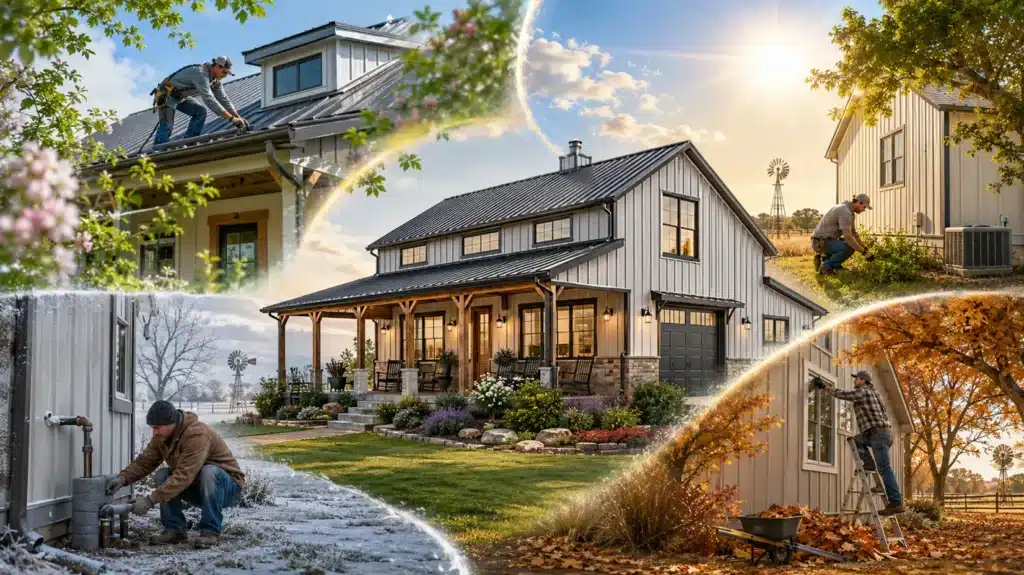
Breaking maintenance into seasons makes it manageable. Texas weather dictates a fairly natural rhythm for when specific tasks make sense.
Spring is the right time to inspect the roof after winter, clean gutters before storm season, check exterior sealants at trim and penetrations, and service the HVAC before the summer cooling demand peaks. It’s also the time to check the foundation perimeter and address any grading issues from winter rainfall.
Summer shifts focus to monitoring interior humidity levels, clearing any vegetation growing against the siding base, and watching for signs that the HVAC system is struggling to maintain setpoint temperatures. This is an early indicator of filter issues, refrigerant loss, or duct leakage.
Fall is the second roof inspection window. Check fasteners and ridge caps before winter. Inspect caulking around windows and doors, and prepare any exposed water lines in North or West Texas for freeze potential. Service the heating side of the HVAC before it’s needed.
Winter in most of Texas is mild, but hard freezes hit unpredictably. Owners in regions that saw February 2021-style events should have a freeze plan: know where the main shutoff is, keep interior temperatures above 55°F during extreme cold, and insulate any exposed supply lines in non-conditioned spaces like the shop area.
Planning Major System Replacements in Advance
Long-term barndominium ownership in Texas means thinking ahead about system replacements. None of these are surprises, they’re predictable costs that can be budgeted for rather than absorbed as emergencies.
Over a 10 to 20-year window, the replacements most Texas barndominium owners should plan for include:
- HVAC replacement or major service at the 12 to 15-year mark
- Water heater replacement at 10 to 12 years
- Well pump replacement within a 15 to 25-year window for rural properties
- Septic tank pump-outs every three to five years, with drain field evaluation at the 15 to 20-year mark
- Exterior sealant and caulking refresh every five to seven years at penetration points
- Possible HVAC duct inspection and sealing at the 10-year mark for ducted systems
What you typically won’t replace at the 20-year mark in a well-built barndominium: the steel frame, the metal roof panels, the foundation, or the exterior siding panels. These are the components designed to outlast everything else.
Owners building in Central Texas face a different combination of maintenance variables than those in coastal or heavily wooded areas, which is why a builder’s regional experience directly affects how well a barndominium is set up for long-term ownership.
Choosing the right design from the start also plays a role. Texas barndominium floor plans that account for climate, HVAC zoning, and drainage planning reduce long-term maintenance burdens significantly compared to generic designs adapted for Texas after the fact.
Conclusion
Maintaining a barndominium in Texas over 10 to 20 years is less about constant repairs and more about consistent, scheduled attention to the right systems. The steel frame, metal roof, and metal siding are long-life components that reward basic upkeep with decades of performance. The systems that need active management, HVAC, moisture control, septic, and foundation monitoring, are predictable and manageable for any owner who knows what to expect.
Build quality sets the baseline: a barndominium engineered for Texas conditions, properly insulated, and correctly detailed at the start will reach 20 years in better shape than one where corners were cut during construction. Plan the maintenance schedule from move-in day, and the long-term ownership experience is exactly what makes barndominiums a compelling option across the state.
Frequently Asked Question
How often does a barndominium metal roof need to be replaced in Texas?
A quality metal roof on a Texas barndominium typically lasts 40 to 70 years before the panels need replacement. The components that require attention well before that are the fasteners, ridge cap sealants, and penetration seals, which should be inspected twice a year and maintained as needed. Regular inspection is what keeps the roof performing at the upper end of its lifespan rather than the lower end.
Do barndominiums have foundation problems in Texas?
Expansive clay soils in parts of Texas, particularly North Texas and some areas of Central Texas, create more foundation movement than other soil types. A properly engineered foundation designed for the specific soil conditions on a given property will handle this movement, but foundation monitoring is still important over time. Early signs of movement include sticking doors, drywall cracks at window corners, and visible gaps at the slab perimeter. Proper drainage around the structure is the most effective way to reduce soil movement and protect foundation performance long term.
What maintenance does a barndominium septic system need in Texas?
Most residential septic tanks need pumping every three to five years. In Texas, aerobic septic systems are common in rural areas and require a maintenance contract under TCEQ regulations, which typically includes quarterly inspections and air pump servicing. Annual visual inspection of the drain field for signs of saturation or surface seeping is also recommended. Septic maintenance is one of the most predictable rural maintenance costs and should be budgeted from the start of ownership.
How does Texas humidity affect barndominium maintenance?
Humidity is the primary long-term maintenance concern for barndominiums in East Texas and along the Gulf Coast. Without proper insulation, vapor barriers, and HVAC sizing, warm humid air contacting cool metal surfaces creates condensation inside the wall assembly, leading to rust on steel framing, degraded insulation, and potential mold. Properly built barndominiums manage this through closed-cell spray foam insulation, correctly sized HVAC with dehumidification capacity, and sealed vapor barriers at the slab. Owners in humid regions should also run supplemental dehumidification during peak summer months.
Is barndominium maintenance cheaper than a traditional home in Texas?
Over a 10 to 20-year period, a well-built barndominium generally costs less to maintain than a comparable traditional wood-frame home in Texas. Steel framing eliminates termite treatment, rot repair, and wood siding maintenance. Metal roofing removes the 15 to 20-year shingle replacement cycle. The systems that require more active management in a barndominium, particularly HVAC and moisture control, are predictable and manageable with a consistent maintenance schedule. Build quality is the key variable: barndominiums built to a proper construction standard cost less to maintain than those where insulation, drainage, or detailing were done poorly.