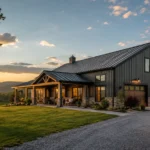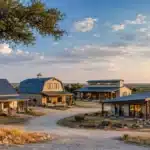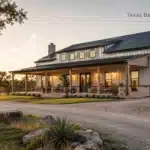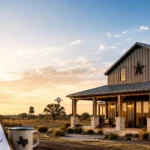
Texas weather is not predictable. A barndominium built in West Texas faces different wind conditions than one on the Gulf Coast, North Texas prairie, or open ranch land in Central Texas. That is why wind engineering matters long before concrete is poured or steel is erected.
Properly engineered barndominiums are designed around regional wind exposure, soil conditions, code requirements, and structural load paths so the home can perform safely during severe Texas weather events for decades.
Why Wind Loads Matter in Texas
Texas experiences some of the most demanding wind conditions in the country. Tornadic activity, straight-line winds, tropical storms, and open terrain exposure all influence how structures must be designed.
In many rural parts of Texas, wind becomes even more aggressive because there are fewer natural windbreaks like dense tree cover or nearby structures. Large open acreage, which is common for barndominium builds, increases exposure pressure on walls, roof systems, doors, and connections.
For homeowners, this affects:
- Structural safety
- Long-term durability
- Insurance requirements
- Engineering costs
- Foundation design
- Roof system performance
- Building code compliance
A properly engineered barndominium is not simply a metal shell placed on a slab. Every structural component must work together to resist uplift, lateral pressure, and dynamic wind movement.
Understanding Texas Wind Zones
Texas does not have one universal wind requirement. Wind load design changes significantly depending on the county, terrain, elevation, and proximity to the coast.
Coastal Texas Has the Highest Wind Requirements
Areas near the Gulf Coast typically require the most aggressive wind engineering due to hurricane exposure.
This includes regions near:
- Corpus Christi
- Galveston
- Houston coastal zones
- South Texas coastal counties
These projects often require:
- Higher design wind speeds
- Stronger structural connections
- Enhanced anchoring systems
- Additional roof fastening requirements
- More robust door and window protection
A barndominium built in coastal South Texas may be engineered very differently than one built in the Hill Country or East Texas.
Open Rural Land Increases Wind Exposure
Even inland counties can require significant engineering when structures sit on exposed ranch land.
Large open properties common across Central Texas, West Texas, and ranch developments throughout the state often experience stronger effective wind pressure because there are fewer obstructions slowing wind movement.
Two homes in the same county may require different engineering approaches depending on:
- Tree coverage
- Elevation
- Terrain category
- Surrounding structures
- Ridge placement
- Building orientation
How Wind Loads Are Calculated
Wind load engineering is based on multiple factors, not just wind speed alone.
Professional engineers evaluate:
Design Wind Speed
Texas wind maps establish baseline design speeds for different regions.
These speeds are determined using standards from the International Residential Code (IRC) and International Building Code (IBC), along with engineering standards like ASCE 7.
Exposure Category
Exposure categories measure how open or protected the building site is.
Examples include:
- Open ranch land
- Dense wooded areas
- Suburban neighborhoods
- Coastal exposure zones
Open terrain produces higher wind pressures because nothing disrupts airflow.
Building Height and Shape
Large roof spans and tall wall systems can create increased uplift forces.
Barndominiums often feature:
- Open floor plans
- Taller sidewalls
- Wide clear-span interiors
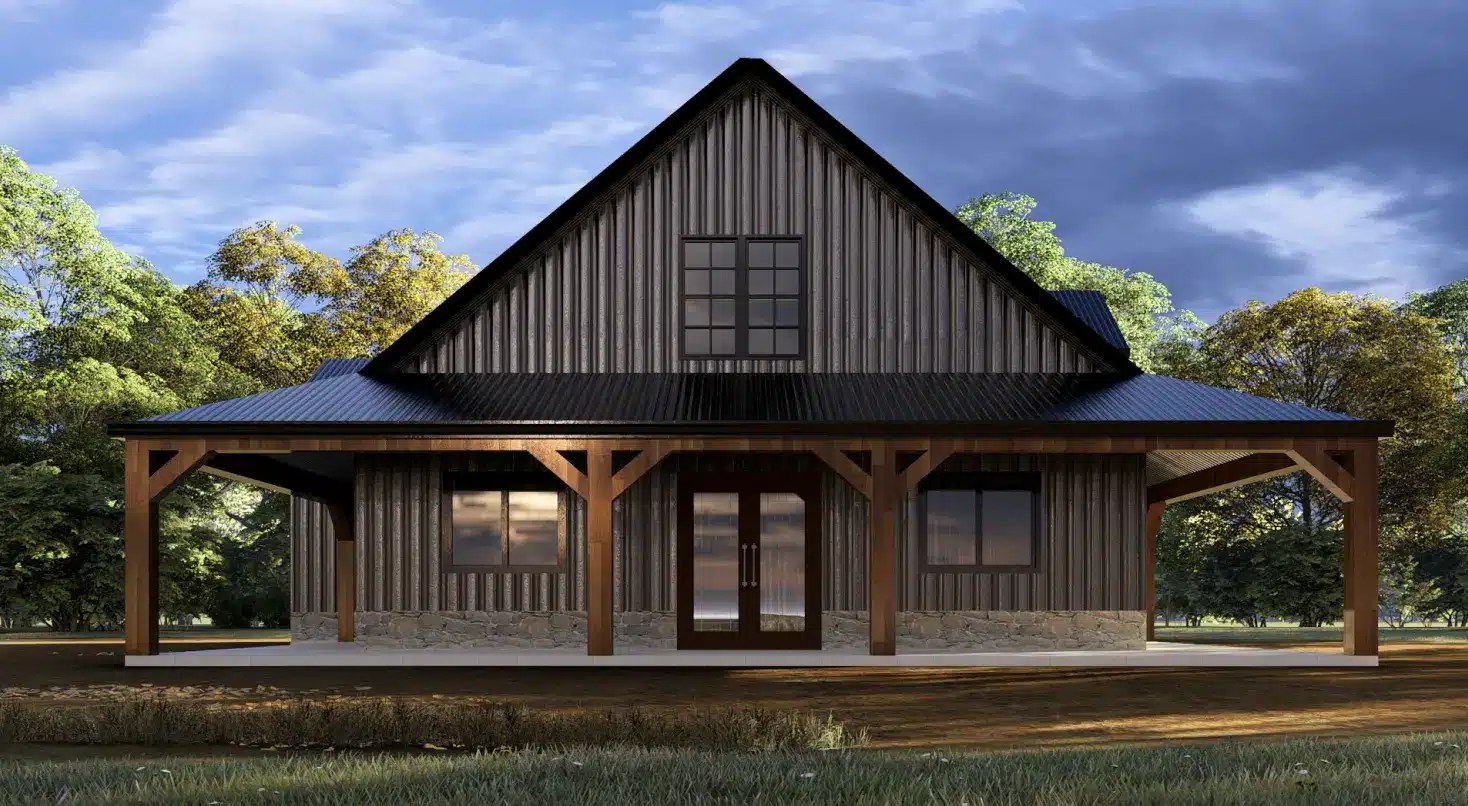
- Large porch systems
- Extended rooflines
All of these affect structural calculations.
Internal Pressure
Large garage doors, shop doors, or improperly reinforced openings can create internal pressurisation during storms.
If wind breaches a weak opening, internal pressure can dramatically increase uplift stress on the roof system.
This is one reason engineered openings and reinforced framing matter.
Why Steel Framing Performs Well in High Winds
One reason barndominiums are popular across Texas is the structural performance of properly engineered steel systems.
Unlike conventional stick-built homes that rely heavily on numerous smaller framing members, steel building systems create a stronger integrated structural frame.
Benefits include:
- Higher strength-to-weight ratio
- Reduced warping or twisting
- Better span capability
- Improved resistance to lateral movement
- Stronger connection systems
- Enhanced durability over time
A properly engineered steel structure distributes wind forces throughout the building rather than concentrating stress in weaker areas.
This is particularly important for large custom homes with workshops, garages, RV storage, or oversized covered porches.
Want To Speak To a Qualified Barndominium Builder in Texas?
The Importance of Load Paths
One of the most overlooked parts of wind engineering is the structural load path.
A load path refers to how wind forces travel through the structure into the foundation.
Every component must transfer force properly:
- Roof panels
- Purlins
- Rafters
- Frames
- Bracing
- Anchor bolts
- Foundation systems
If one weak point exists in the chain, structural failure risk increases significantly.
Proper engineering ensures all components work together as a complete system.
Roof Uplift: The Biggest Threat During Wind Events
In many Texas storms, roof uplift becomes the primary structural concern.
As wind travels across a roof surface, pressure differences can create powerful upward forces. This is why proper roof fastening and framing design are critical.
Engineered barndominiums address uplift through:
Reinforced Roof Connections
Roof systems must be mechanically connected to the main structure using engineered fastening schedules.
Proper Fastener Spacing
Fastener patterns vary depending on:
- Roof zones
- Edge exposure
- Wind speed requirements
- Roof geometry
Edges and corners typically experience the highest uplift pressures.
Engineered Trusses or Rigid Frames
Clear-span systems require precise engineering to handle long spans under wind stress.
Secondary Bracing Systems
Bracing prevents structural distortion during severe lateral loading.
Foundations Play a Major Role in Wind Resistance
Many buyers focus only on the metal structure itself, but foundations are equally important in resisting wind loads.
Strong winds generate overturning forces that transfer directly into the slab and footing system.
Foundation engineering often includes:
- Reinforced slab systems
- Thickened perimeter beams
- Pier systems where needed
- Engineered anchor bolt placement
- Soil-specific reinforcement strategies
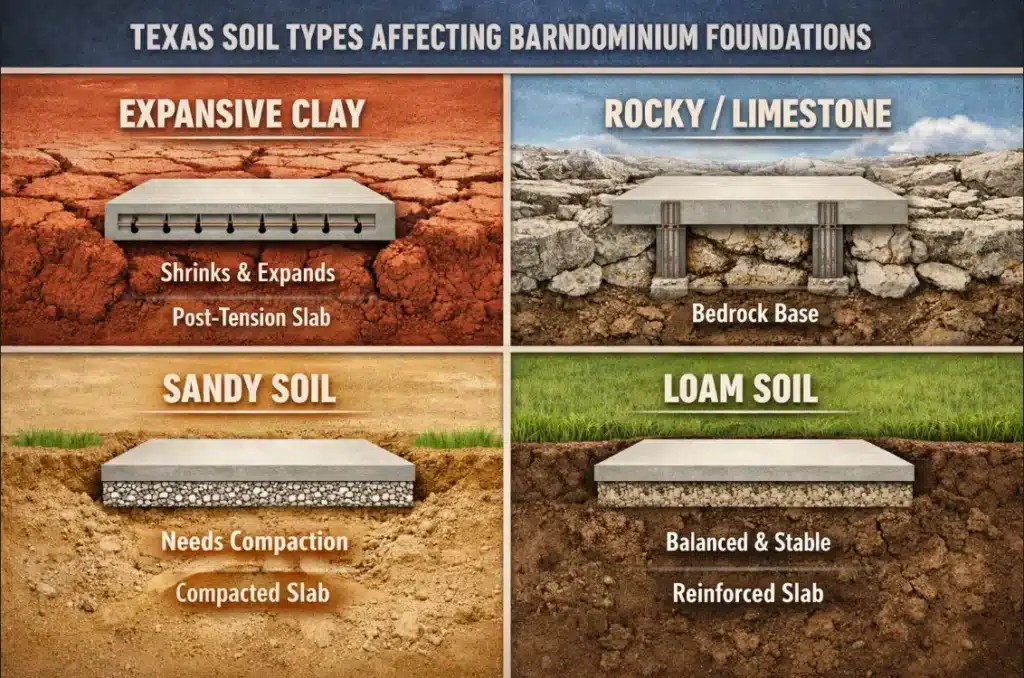
Texas soil conditions vary dramatically from region to region.
Expansive clay in North Texas behaves differently than rocky Hill Country terrain or sandy coastal soils. This is one reason site-specific engineering matters so much during the planning stage.
Projects involving rural acreage often benefit from early land evaluation assistance for Texas barndominiums before engineering begins.
Garage Doors and Shop Openings Are Critical Weak Points
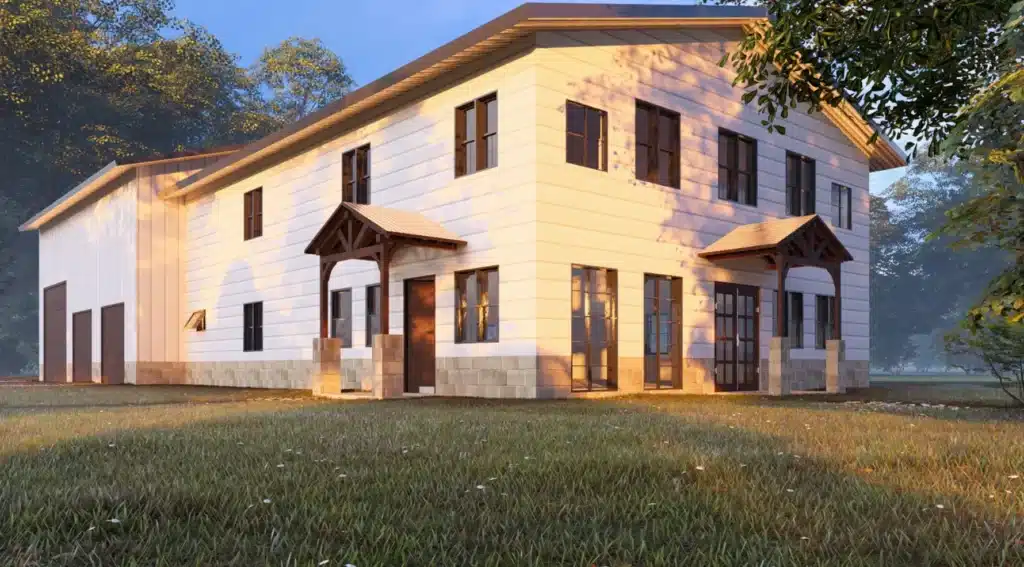
Large overhead doors are common in barndominiums, especially when attached shops or RV storage are included.
These openings can become structural vulnerabilities if not properly engineered.
Wind-rated doors may be required depending on:
- Region
- Wind speed
- Opening size
- Exposure category
Improperly rated doors can fail under pressure, allowing wind intrusion that dramatically increases internal building pressure.
This is why engineered framing around large openings is essential.
Porch Design and Wind Engineering
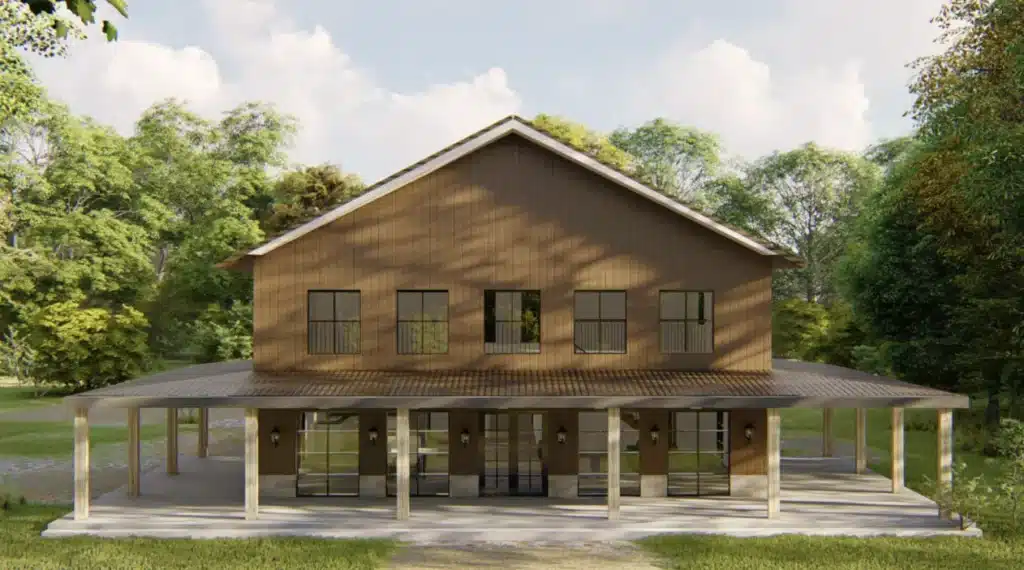
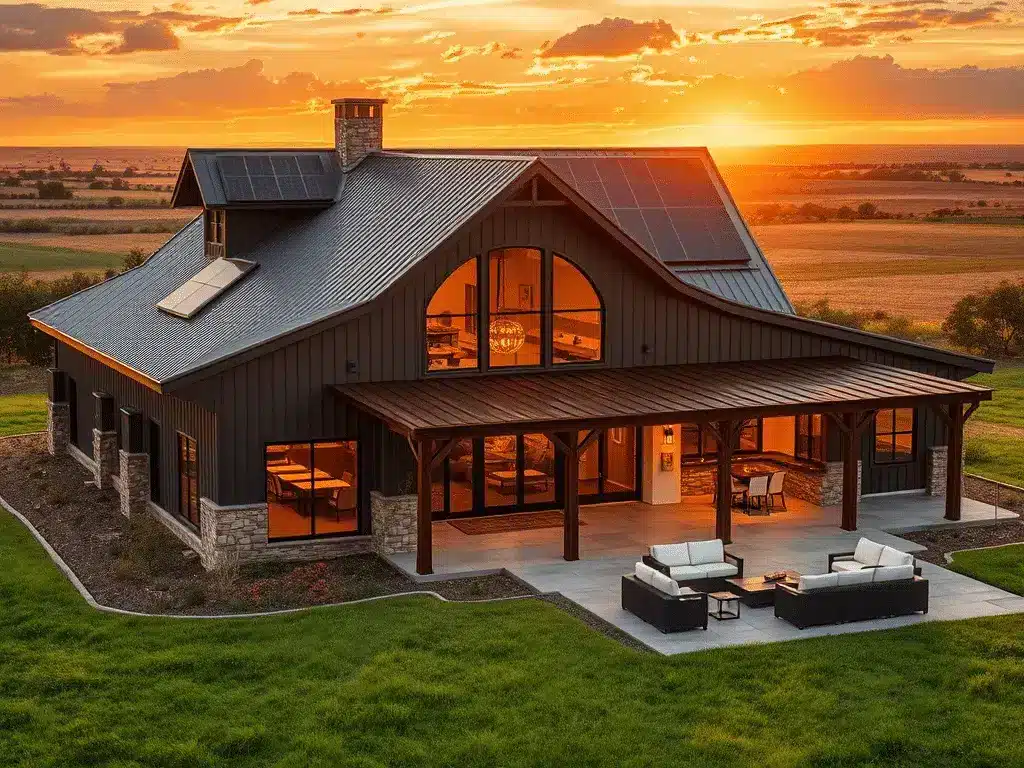
Large wraparound porches are extremely popular in Texas barndominium design, but they also create additional engineering considerations.
Porches can experience:
- Roof uplift
- Lateral movement
- Differential loading
- Connection stress
Long unsupported spans or improperly braced porch systems can become weak points during storms.
Experienced engineers account for:
- Beam sizing
- Column spacing
- Roof tie-ins
- Connection hardware
- Wind exposure
This becomes particularly important for custom homes designed with expansive outdoor living areas.
Regional Differences Across Texas
North Texas
Storm systems and severe straight-line winds are common across North Texas.
Projects in this region often require careful roof uplift engineering due to open terrain exposure.
Many buyers researching North Texas barndominiums underestimate how much wind exposure changes once building outside city limits.
Central Texas
Hill Country topography can create variable wind patterns and uplift conditions depending on ridge placement and elevation.
Custom homes built on elevated sites often require more detailed structural analysis.
This is especially true for turnkey barndominiums in Austin TX and surrounding rural developments where terrain shifts dramatically.
West Texas
West Texas frequently experiences sustained high winds due to open terrain and minimal windbreaks.
Barndominiums in this region often benefit from highly reinforced framing systems and carefully engineered anchoring methods.
East Texas
Tree coverage can reduce exposure in some areas, but severe storm systems remain common.
Soil movement and moisture conditions also influence foundation engineering throughout East Texas.
South Texas
South Texas barndominium projects must often balance heat performance, hurricane considerations, and long-term durability.
Coastal-adjacent counties typically have stricter wind requirements than inland regions.
County and City Requirements Can Differ
Texas building requirements vary substantially by jurisdiction.
Some rural counties have limited permitting oversight, while others enforce detailed wind engineering standards.
ETJ jurisdictions can also affect requirements. Buyers researching what an ETJ means in Texas often discover that building rules may differ significantly just outside city limits.
Engineering requirements may depend on:
- County adoption of IRC editions
- City-specific amendments
- Floodplain regulations
- Wind zone classifications
- Permit enforcement standards
This is why experienced Texas builders coordinate engineering with local jurisdictions before construction begins.
Have a Question About The Barndominium Inspections?
Wind Engineering and Insurance
Insurance carriers increasingly evaluate structural engineering details when underwriting homes in Texas.
Features that may influence insurability or long-term risk include:
- Engineered plans
- Wind-rated doors
- Roof attachment systems
- Foundation design
- Roof geometry
- Construction method
- Exposure category
Poorly engineered structures may face:
- Higher premiums
- Coverage limitations
- Inspection issues
- Claims disputes after storms
Proper engineering documentation matters long after construction is complete.
Why Cheap Shell Packages Can Become Problems
Some buyers assume all metal building systems perform equally in high winds. That is not true.
A generic shell package designed without site-specific Texas engineering can create major issues later.
Common problems include:
- Underdesigned framing
- Incorrect exposure assumptions
- Weak connection systems
- Insufficient anchoring
- Improper foundation integration
- Noncompliant wind calculations
Engineering should never be treated as an afterthought.
This becomes especially important for buyers comparing shell providers versus a fully integrated Texas turnkey barndominium construction company that coordinates engineering, foundation design, fabrication, and full construction together.
Learn about the maintenance of a barndominium in Texas and what to expect in 10 to 20 years.
Wind Resistance Starts During Design
Good wind performance begins with intelligent design decisions early in the planning process.
Examples include:
- Roof Shape: Certain roof geometries perform better under high wind conditions.
- Building Orientation: Positioning relative to prevailing winds can affect exposure pressure.
- Overhang Length: Long overhangs may require additional reinforcement.
- Opening Placement: Large openings affect pressure calculations and structural bracing.
- Structural Simplicity: Complex roof transitions and unsupported spans can create engineering challenges.
This is why custom planning matters more than selecting a standard building kit.
Buyers reviewing Texas barndominium floor plan ideas should understand that aesthetics and engineering must work together.
The Role of Site Evaluation
No two Texas properties behave the same under wind conditions.
Before engineering begins, experienced builders evaluate:
- Elevation
- Terrain exposure
- Soil conditions
- Drainage patterns
- Flood risk
- Existing vegetation
- Ridge lines
- Orientation
This is closely connected to broader planning topics like choosing land for a Texas barndominium, Texas flood zone considerations, and building barndominiums in Texas counties and cities.
Early site analysis helps prevent expensive engineering revisions later.
Inspections and Engineering Verification
During construction, multiple inspections help verify that structural systems are installed according to engineered plans.
These may include:
- Foundation inspections
- Reinforcement verification
- Anchor bolt placement
- Structural steel inspections
- Framing inspections
- Roof system inspections
Buyers researching barndominium inspections in Texas should understand that inspection quality can directly affect long-term structural performance.
Engineering only works when construction follows the plans correctly.
Why Experience Matters in Texas Wind Engineering
Texas is one of the most demanding environments in the country for residential construction.
Building safely here requires understanding:
- Regional weather patterns
- Soil movement
- Wind exposure
- Local permitting
- Structural engineering integration
- Metal building performance
- Foundation behavior
An experienced Texas barndominium contractor understands how these systems work together across different regions of the state.
That becomes increasingly important on custom projects involving:
- Large clear spans
- Multi-use buildings
- Attached workshops
- RV storage
- Complex roof systems
- Elevated build sites
- Rural acreage
Final Thoughts
Wind engineering is one of the most important parts of building a barndominium in Texas, yet many buyers do not fully understand it until late in the process.
A properly engineered structure is not just about meeting minimum code requirements. It is about creating a home designed specifically for Texas conditions, property exposure, and long-term structural durability.
Every successful project depends on the integration of engineering, foundation design, site evaluation, framing systems, and experienced construction execution from the very beginning.
For buyers planning a custom build anywhere from rural ranch land to growing suburban developments, working with an experienced metal barndominium construction company can help ensure the structure is designed appropriately for the real-world wind conditions the home will face over time.
Frequently Asked Question
Are barndominiums safe during high winds in Texas?
Yes, properly engineered barndominiums can perform extremely well in high-wind environments. The key is site-specific engineering that accounts for local wind speeds, exposure category, foundation design, and structural load paths. Steel framing systems used in many Texas barndominiums are particularly effective at handling lateral and uplift forces when correctly designed and installed.
What wind speed are Texas barndominiums typically engineered for?
The required design wind speed depends on the location of the build. Coastal areas in Texas generally require much higher wind ratings than inland regions due to hurricane exposure. Engineers determine the correct design criteria based on county requirements, terrain exposure, building height, and applicable building codes.
Do rural barndominiums require stronger wind engineering?
Often, yes. Rural properties typically have fewer trees, buildings, or natural windbreaks, which increases wind exposure. Open ranch land in areas like West Texas or Central Texas can place greater pressure on walls, roof systems, and large openings compared to homes built in more protected suburban settings.
Can large garage or shop doors affect wind resistance?
Absolutely. Oversized overhead doors are one of the most important structural considerations in barndominium engineering. If a large opening fails during a storm, internal pressure inside the building can increase rapidly and place additional stress on the roof system. Properly engineered framing and wind-rated doors help reduce this risk.
Does the foundation affect how a barndominium handles wind loads?
Yes. Wind resistance is not just about the steel structure above ground. Strong winds create uplift and overturning forces that transfer directly into the slab and foundation system. Reinforced concrete design, anchor bolt placement, soil conditions, and footing depth all play major roles in overall structural performance during severe Texas weather.