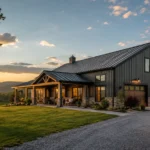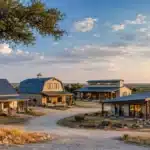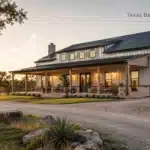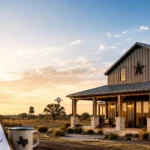
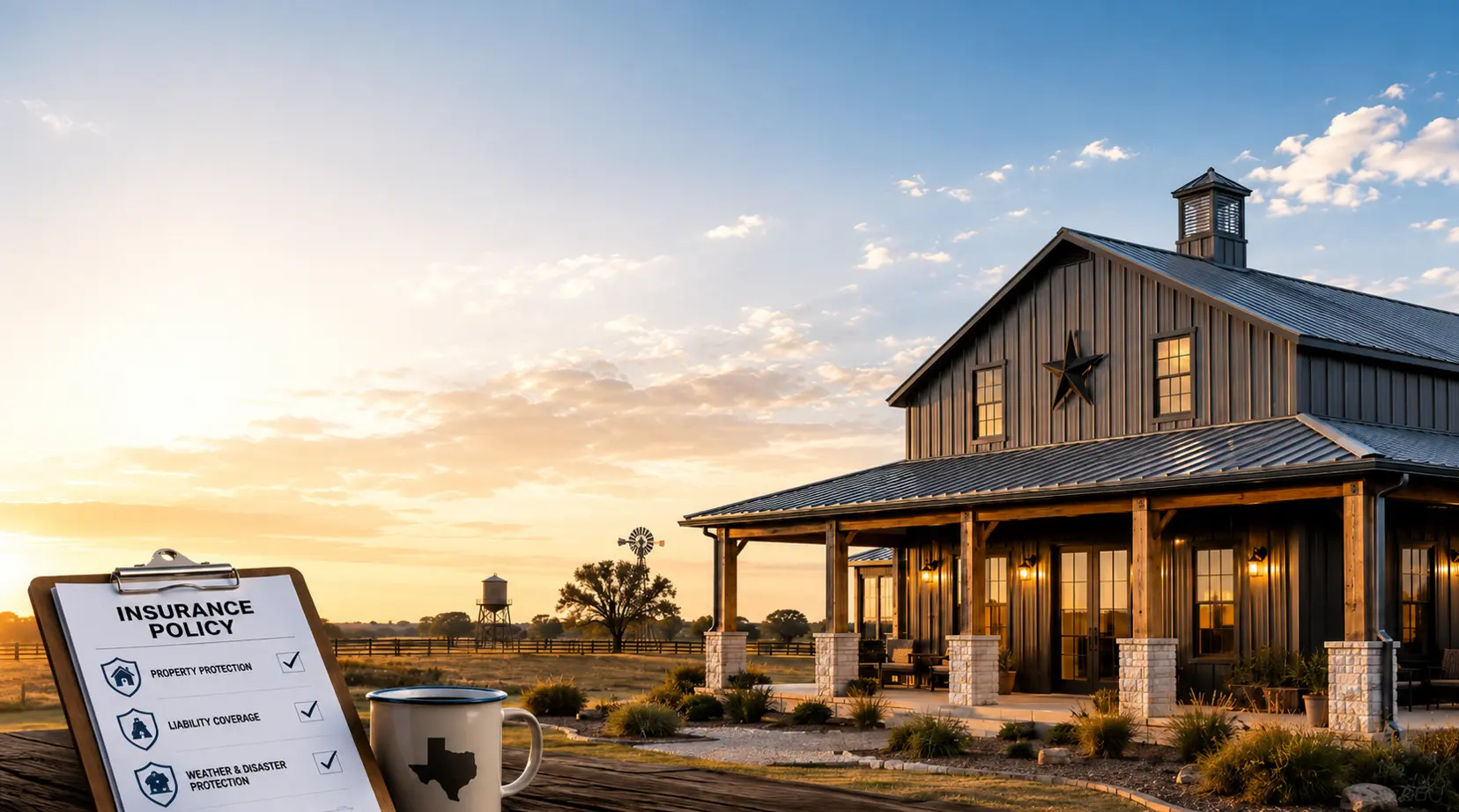
Insurance is one of the last things most people research before building a barndominium, and it often comes as a surprise. A structure that combines living space with a workshop, garage, or agricultural area does not fit neatly into the categories a standard homeowners policy was built around.
In Texas, where wind, hail, and flood exposure vary sharply by county, that mismatch matters even more. This guide explains how barndominium insurance actually works, what insurers look at, and what Texas owners need to watch for before signing a policy.
Why Barndominium Insurance Isn’t Just Home Insurance
A conventional home insurance policy assumes a single-purpose structure: a house, used only as a house. A barndominium usually blends living quarters with a shop, garage, or storage area, and sometimes agricultural use as well. That dual-purpose design is exactly what standard underwriting was not built to handle.
Some national carriers respond by quoting commercial rates for what is really a residential structure, or declining to write a policy at all. Others will insure the home but exclude the workshop, or apply restrictions on metal roofing and siding that would not appear on a typical suburban policy. None of this means a barndominium is uninsurable. It means the policy needs to be built around how the property is actually used, not assumed from the outside.
How Insurers Classify a Barndominium
Classification is the first hurdle, and it shapes everything that follows. Underwriters generally sort a property as residential, agricultural, or commercial, and a barndominium can look like any of the three depending on its layout and use. A custom home builder in Texas typically produces a structure that reads clearly as residential, since the layout, materials, and daily use are all domestic. A barndominium with a large shop, farm equipment, or income-producing space attached can blur that line.
The safest approach is to ask the insurer directly whether they are classifying the property as a residential dwelling or as a commercial or agricultural structure, and to get that classification in writing. Misclassification does not just affect the premium. It can affect whether a future claim gets paid at all.
Dwelling Coverage and Replacement Cost
Dwelling coverage should reflect what it would cost to rebuild the structure today, not what it cost to build it originally. Material and labor prices move, and a barndominium insured at its original construction value can end up significantly underinsured within a few years. Finding out how much does it cost to build a barndominium gives owners a realistic benchmark for setting that coverage correctly rather than guessing.
Owners should also confirm whether their policy pays on a replacement cost or actual cash value basis:
- Replacement cost value pays what it actually costs to rebuild or repair the structure at today’s prices.
- Actual cash value subtracts depreciation, which means metal panels, roofing, and fixtures may be reimbursed at less than what it costs to replace them.
- Most owners are better served by replacement cost coverage, even though it typically carries a higher premium.
Insuring the Workshop, Equipment, and Contents
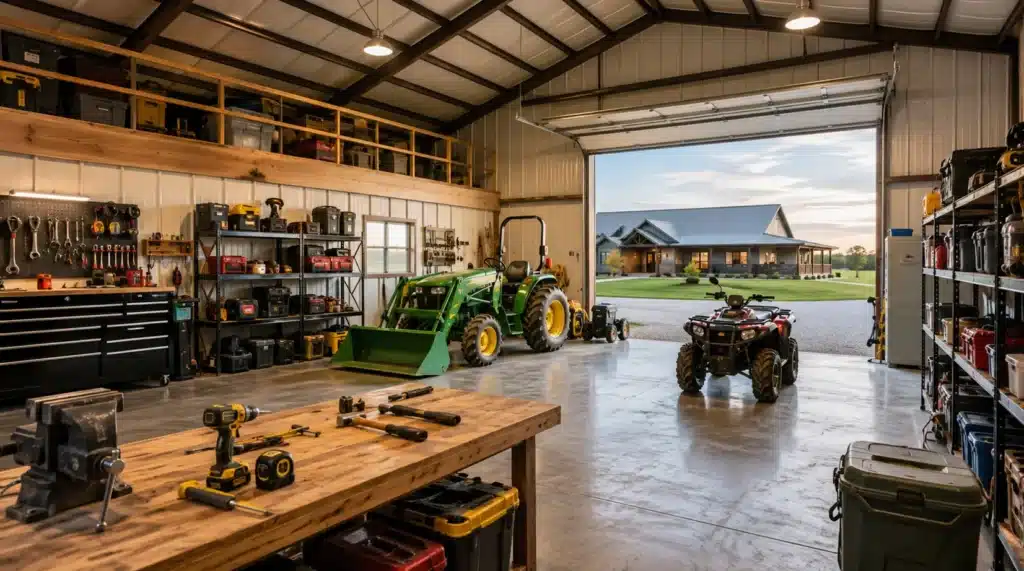
Most barndominiums in Texas include a dedicated shop, garage, or storage bay, and that space needs its own consideration in the policy. The way Texas metal barndominium construction separates the living quarters from the shop area affects how an insurer underwrites contents coverage on each side of the building.
Tools, ATVs, tractors, hunting gear, and any equipment used for a side business stored in the shop may not be automatically covered under a standard homeowners policy. It is worth asking the insurer to itemize what is covered inside the shop specifically, rather than assuming it falls under the same contents coverage as the home.
Wind, Hail, and Storm Coverage in Texas
Wind and hail claims are a significant driver of insurance cost across much of the state, and metal construction plays into that in both directions. Homes engineered to meet current Texas wind loads are often viewed as lower risk, and some insurers offer premium credits for standing seam roofing or Class 4 impact-resistant metal panels rated under UL 2218.
It is worth asking an insurer directly whether they offer a discount for impact-resistant roofing, since that single question can affect the premium by hundreds of dollars a year in the state’s more active hail regions.
Would you like to speak to qualified barndo builder in Texas?
Flood Risk and Barndominium Insurance
Standard homeowners and barndominium policies exclude flood damage, regardless of how the structure is built or what it is made of. Flood coverage has to be purchased separately, typically through FEMA’s National Flood Insurance Program or a private flood carrier. Checking whether a property sits within mapped Texas flood zones before construction begins helps set realistic expectations for this added cost, rather than discovering it after the policy is already in place.
Even properties outside a designated flood zone can flood during severe weather, which is why many rural Texas landowners choose to carry flood coverage regardless of official zone designation.
Regional Differences Across Texas
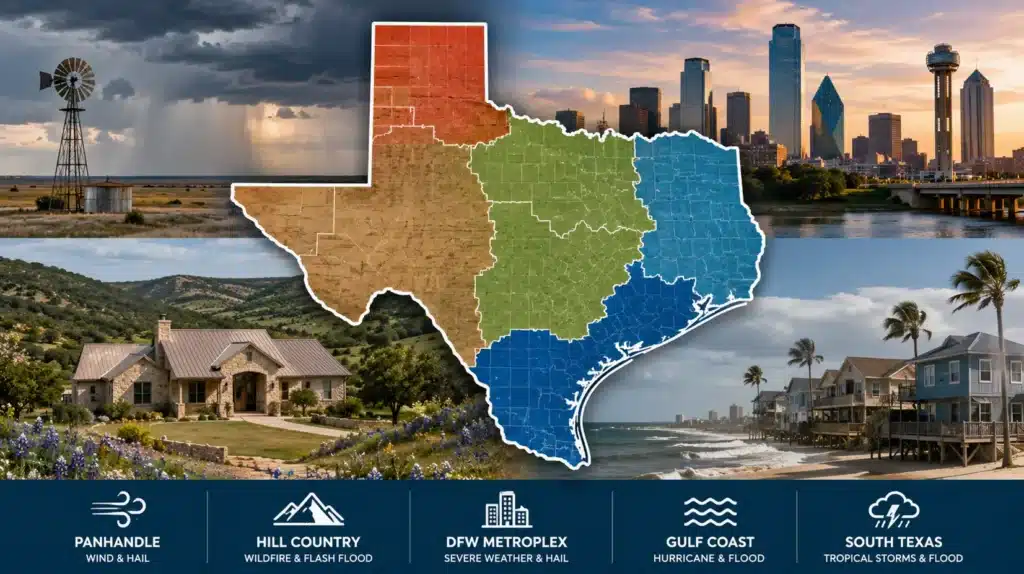
Insurance cost and availability shift noticeably depending on where in Texas a barndominium sits. North Texas barndominiums often sit within an active hail corridor stretching through the Dallas-Fort Worth area, which leads some insurers to require impact-resistant roofing before they will write a policy.
South Texas barndominiums closer to the Gulf Coast face a different set of risks, including higher wind exposure and storm surge, which typically pushes premiums well above what an inland property would pay for a similar structure.
Common Mistakes Texas Barndominium Owners Make
Most coverage gaps come down to a handful of avoidable mistakes:
- Insuring the property at original build cost instead of current replacement cost.
- Assuming the shop or workshop area is automatically covered under the same policy as the living space.
- Choosing actual cash value coverage without understanding how depreciation affects a claim payout.
- Not confirming whether the insurer classifies the property as residential, agricultural, or commercial.
- Skipping a flood policy simply because the property sits outside a mapped flood zone.
Skipping Texas barndominium inspections before finalizing a policy is another common gap, since it can leave a mismatch between what the insurer assumes about the build and what was actually constructed.
Finding the Right Insurance Carrier in Texas
Not every insurer has experience with dual-purpose structures, and that experience matters more than the size of the carrier. Farm bureau and agricultural insurers, along with independent agents who represent multiple carriers, tend to understand barndominiums well because they routinely write policies for properties that blend residential and agricultural use.
A barndominium contractor in Texas who documents construction details clearly, including foundation type, framing, and roofing class, makes it considerably easier for an underwriter to classify the property correctly the first time. Working with a turnkey barndominium builder in Texas means those details, from foundation depth to roofing material, are recorded in one place rather than scattered across several subcontractors, which simplifies the underwriting conversation considerably.
Final Thoughts
Barndominium insurance in Texas is not harder to get, but it does require more precision than a standard homeowners policy. Getting the classification right, insuring to current replacement cost, covering the shop and its contents specifically, and accounting for wind, hail, and flood exposure all make the difference between a policy that pays out cleanly and one that leaves gaps. Working through these details before or during construction, rather than after move-in, puts owners in a far stronger position when it is time to file a claim.
Frequently Asked Question
Can you actually get insurance on a barndominium in Texas?
Yes. Most insurance companies offer coverage for barndominiums, and it is treated as a form of home insurance rather than something entirely separate. The process can take longer than insuring a standard house, since the insurer needs to understand the layout and use of the property first.
Is barndominium insurance cheaper than insuring a traditional house?
It can be, since steel construction resists issues like termites and rot that affect wood-framed homes. However, cost varies widely based on size, location, workshop space, and storm exposure, so a barndominium is not automatically cheaper to insure than a comparable traditional home.
Does barndominium insurance cover the workshop and equipment stored inside it?
It depends on the policy. Many insurers will cover the shop or workshop structure itself but require specific itemization for tools, farm equipment, or business-related items stored inside. It is worth confirming this coverage in writing rather than assuming it is included.
Do I need separate flood insurance for a Texas barndominium?
Yes, in most cases. Standard homeowners and barndominium policies exclude flood damage regardless of how the structure is built. Flood coverage needs to be purchased separately, typically through the National Flood Insurance Program or a private flood insurer.
Will insurers deny coverage because a barndominium has a metal roof or siding?
Some carriers do exclude homes with metal roofs or siding, usually due to hail-related claims history, while others specifically insure metal structures and may even offer discounts for impact-resistant roofing. Coverage availability depends heavily on the individual carrier rather than the material itself.