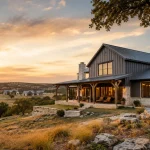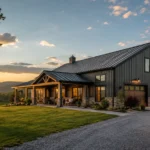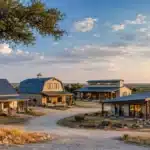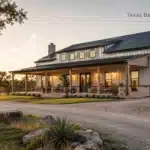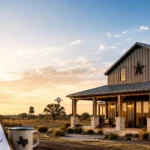
Texas has become the epicenter of barndominium construction in America. The combination of affordable rural land, favorable building codes, and a culture that values practical, versatile living spaces has made barndominiums one of the fastest-growing housing trends across the state.
After more than 25 years building barndominiums across Texas and the US, we’ve seen how county regulations, soil conditions, financing requirements, and construction approaches can vary dramatically from one project to the next. This guide breaks down what actually matters when planning a barndominium in Texas, so you can make informed decisions from design through construction.
What Is a Barndominium?
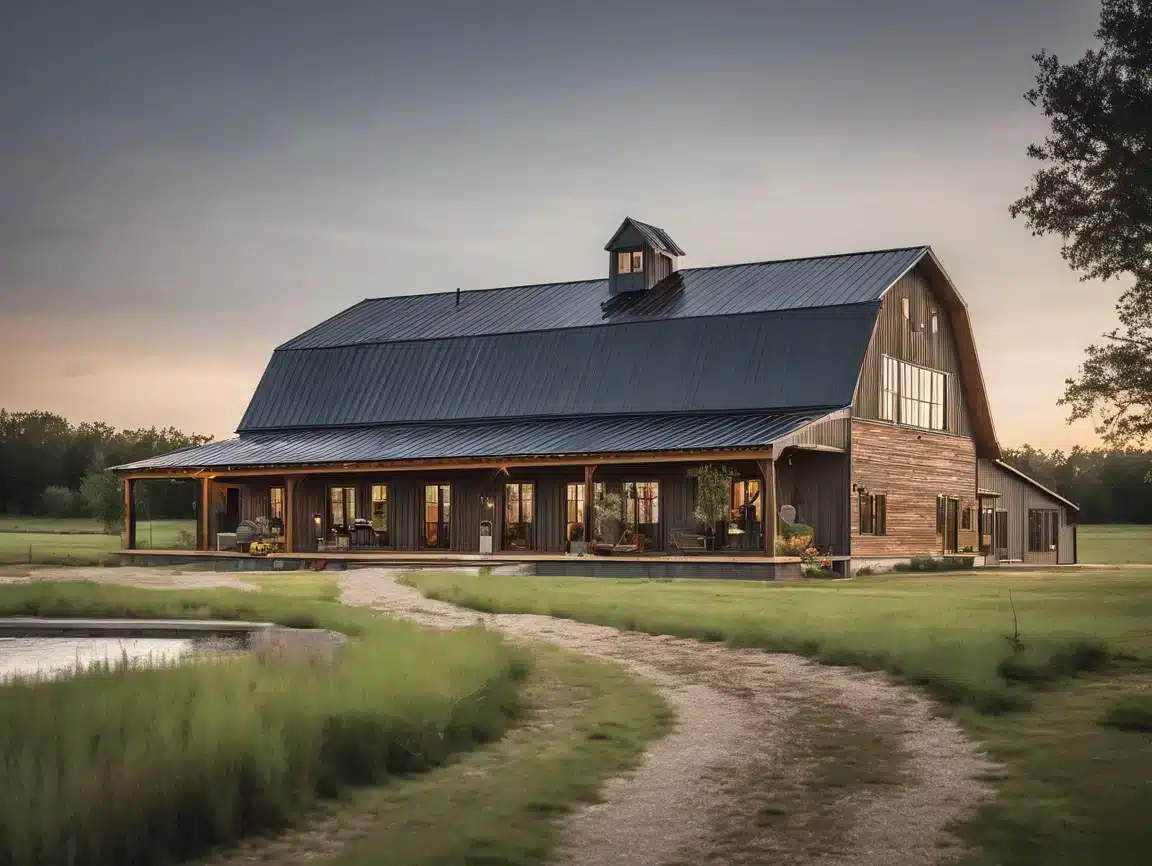
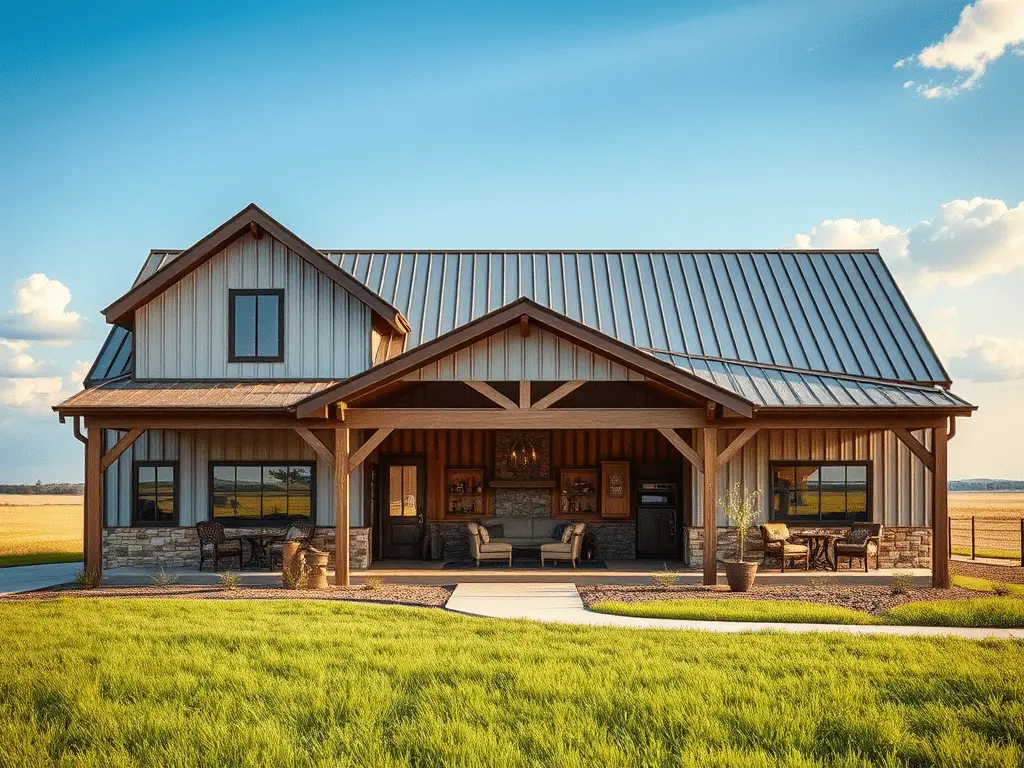
A barndominium is a metal building designed and finished as a residential living space. The term originally described barn conversions – agricultural buildings retrofitted into homes – but today refers primarily to purpose-built steel-frame structures that combine living quarters with workshop, storage, or garage space under one roof.
Unlike traditional stick-built homes that use wood framing and brick or siding exteriors, barndominiums use steel I-beams or rigid-frame columns to support the structure. Exterior walls are typically steel panels, while interiors are finished with standard residential materials: drywall, insulation, flooring, cabinetry, and fixtures that match any conventional home.
Key differences from traditional homes
Steel framing eliminates load-bearing interior walls, allowing for completely open floor plans. You can design a 2,500-square-foot living area with zero interior columns if the engineering supports it. This flexibility is difficult and expensive to achieve with wood-frame construction.
Metal buildings don’t require the same foundation mass as masonry homes. A properly engineered slab with perimeter and interior beams can support the entire structure, reducing foundation costs in many soil types.
Why steel framing dominates Texas barndominium construction
Texas weather demands durability. Steel doesn’t rot, warp, or suffer termite damage – critical advantages in humid Gulf regions and areas with active pest populations. Steel maintains structural integrity in high winds better than wood framing, a significant consideration across much of the state where severe weather is routine.
Material cost stability and speed of construction also favor steel. A steel frame can be erected in days rather than weeks, and metal building components are manufactured to exact specifications, reducing on-site waste and construction variability.
Why Build a Barndominium in Texas
Texas offers a unique combination of factors that make barndominium construction practical and appealing.
Land availability and affordability: Rural Texas counties offer large parcels at prices far below suburban lot costs. You can find 5 to 20-acre tracts within an hour of major metro areas – land suitable for a barndominium with shop space, room for equipment, animals, or privacy that’s impossible in traditional subdivisions.
Climate and building considerations: Texas heat, humidity in coastal regions, and periodic severe weather favor durable construction. Metal roofs reflect solar heat better than shingles. Steel siding requires no painting or replacement. Properly insulated barndominiums stay cooler in summer with less HVAC demand than many traditional homes.
The state’s climate also means fewer freeze-thaw cycles than northern regions, reducing foundation stress and extending the lifespan of exterior materials.
Rural and small-town construction advantages: Many Texas counties have streamlined permitting for agricultural and residential metal buildings. Setback requirements are often less restrictive on rural land. Septic systems and wells are common and well-understood by local contractors and inspectors.
Building in unincorporated areas often means working directly with county officials rather than navigating city planning departments, which can accelerate approval timelines.
Lifestyle benefits: Barndominiums support the Texas lifestyle. Whether you need covered space for equipment and vehicles, a workshop for hobbies or business, or facilities for horses and livestock, a barndominium integrates these functions into your primary residence.
Planning a barndominium in Texas?
Texas Barndominium Costs
Barndominium construction costs in Texas vary based on finish level, location, site conditions, and included space types. Understanding the cost structure helps you budget accurately and compare builders.
Cost per square foot ranges
Finished living space typically runs $140 to $200+ per square foot. This includes fully finished interiors: insulation, drywall, flooring, kitchens, bathrooms, electrical, plumbing, and HVAC. Higher-end finishes – custom cabinetry, luxury tile, upgraded fixtures – push costs toward or above the upper range.
Shop and garage space costs $50 to $90 per square foot when built as unfinished or lightly finished areas. This includes the structural frame, exterior walls and roof, concrete slab, and basic electrical (lighting and outlets). No insulation, finished walls, or climate control unless specifically added.
Covered porches and breezeways run $30 to $55 per square foot. These are roof extensions supported by columns, providing covered outdoor space. Cost includes foundation, columns, roofing, and any necessary electrical for lighting or ceiling fans.
Factors that affect pricing in Texas
County location influences costs through permit fees, inspection requirements, and contractor availability. Building in counties near major metros often costs more due to higher labor rates, while remote counties may add travel expenses and logistical challenges.
Utility availability dramatically impacts budgets. Properties with existing electricity, water, and wastewater connections cost far less to develop than raw land requiring well drilling ($15,000-$35,000), septic installation ($8,000-$25,000), and electrical service extensions ($5,000-$50,000+ depending on distance from existing lines).
Land preparation varies by site. Level lots with stable soil and good drainage require minimal prep – perhaps $5,000 to $12,000 for clearing, grading, and gravel drives. Sites with poor drainage, unstable soil, significant slope, or heavy vegetation can require $20,000 to $60,000+ in sitework before construction begins.
Design complexity affects engineering and construction costs. Simple rectangular floor plans with standard roof pitches cost less to engineer and build than structures with multiple wings, complex rooflines, or extensive custom features.
Example budget scenario:
A 2,400-square-foot barndominium with 1,800 square feet of finished living space and a 600-square-foot shop, on prepared land with utilities available:
- Living space: 1,800 sq ft × $165/sq ft = $297,000
- Shop space: 600 sq ft × $70/sq ft = $42,000
- Covered porch: 400 sq ft × $42/sq ft = $16,800
- Engineering and permits: $8,500
- Site prep and driveway (minimal): $9,000
Total estimated cost: $373,300
This example assumes mid-range finishes, standard engineering, and no major site challenges. Your actual costs will vary based on your specific choices, location, and site conditions.
Find out how to ensure your barndominium holds value in Texas fo resale, if needed.
Step-by-Step: How to Build a Barndominium in Texas
Building a barndominium involves coordinated steps that must happen in sequence. Understanding this process helps you plan timing, ask the right questions, and work effectively with your builder.
Design and planning
The process begins with defining what you need: square footage, number of bedrooms and bathrooms, shop or storage requirements, and desired features. You’ll work with a designer or architect to create floor plans that fit your lifestyle and budget.
Design decisions made early affect everything downstream – foundation engineering, electrical and plumbing layouts, HVAC sizing, and structural requirements. A barndominium floor plans and design specialist helps you make informed choices that balance aesthetics, functionality, and cost.
This phase includes selecting exterior and interior finishes, fixture packages, and any custom elements. Clear decisions now prevent expensive changes during construction.
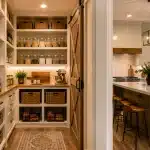
Explore the pantry barndominium ideas for Texas homes that our builders recommend.
Land selection and site evaluation
If you don’t already own land, selecting the right property is critical. Consider access to utilities, road frontage and access easements, soil type and drainage, flood zone status, and county building requirements.
Even if you own land, professional site evaluation identifies issues before they become problems. Soil tests reveal bearing capacity and help engineers design appropriate foundations. Percolation tests determine septic system feasibility. Surveys confirm property boundaries and identify easements or deed restrictions.
Land selection and site evaluation assistance from experienced professionals prevents costly surprises and ensures your chosen property suits your barndominium plans.
Financing and lending considerations
Most buyers need financing for barndominium construction. This process differs from traditional mortgage lending and requires specific preparation.
Lenders need complete plans, specifications, and cost breakdowns before approving construction loans. You’ll typically need 10% to 20% down, depending on the lender and your financial profile.
Working with builders who understand barndominium financing streamlines this process. Barndominium financing support and advice helps you identify appropriate lenders, prepare necessary documentation, and structure your project to meet lending requirements.
Pre-qualification before you commit to land purchases or design contracts protects you from pursuing projects you can’t finance.
Engineering and permitting
Texas requires engineered plans for metal building construction, stamped by a licensed professional engineer. Engineering addresses wind loads, foundation design, structural connections, and Texas-specific building code requirements.
Permit applications go to your county’s building department (or city, if building within city limits). Requirements vary significantly by jurisdiction – some counties have minimal requirements and quick turnaround, others require extensive documentation and multiple plan reviews.
Experienced builders handle this process efficiently because they know county-specific requirements and have established relationships with local building officials. Delays in permitting can stall projects for weeks or months if not managed properly.
Construction and build timeline
Once permits are issued, construction proceeds in phases:
- Site preparation and foundation: Clearing, grading, utility trenching, and concrete work – typically 2 to 4 weeks depending on complexity.
- Metal building erection: Steel frame and exterior panels installed – usually 1 to 2 weeks for the structural shell.
- Rough-ins: Electrical, plumbing, and HVAC systems installed before walls are closed – 2 to 4 weeks depending on project size and complexity.
- Insulation and drywall: Interior walls closed and finished – 2 to 3 weeks.
- Interior finishes: Flooring, cabinetry, fixtures, paint, and trim – 3 to 6 weeks depending on finish level and size.
- Final systems and commissioning: HVAC startup, electrical finals, plumbing tests – 1 week.
Total construction timelines for turnkey projects typically run 4 to 7 months from permit issuance to completion, varying with project complexity, weather delays, and material availability.
Final inspections and move-in
County or city inspectors perform final inspections to verify code compliance. Once approved, you receive a certificate of occupancy authorizing residential use.
Utility companies finalize permanent service connections. Your builder conducts a final walkthrough to demonstrate systems, provide warranty documentation, and address any remaining items.
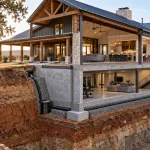
See our guide on building a Barndo in Central Texas on rock, slope and winds.
Land, Zoning, and Permits in Texas
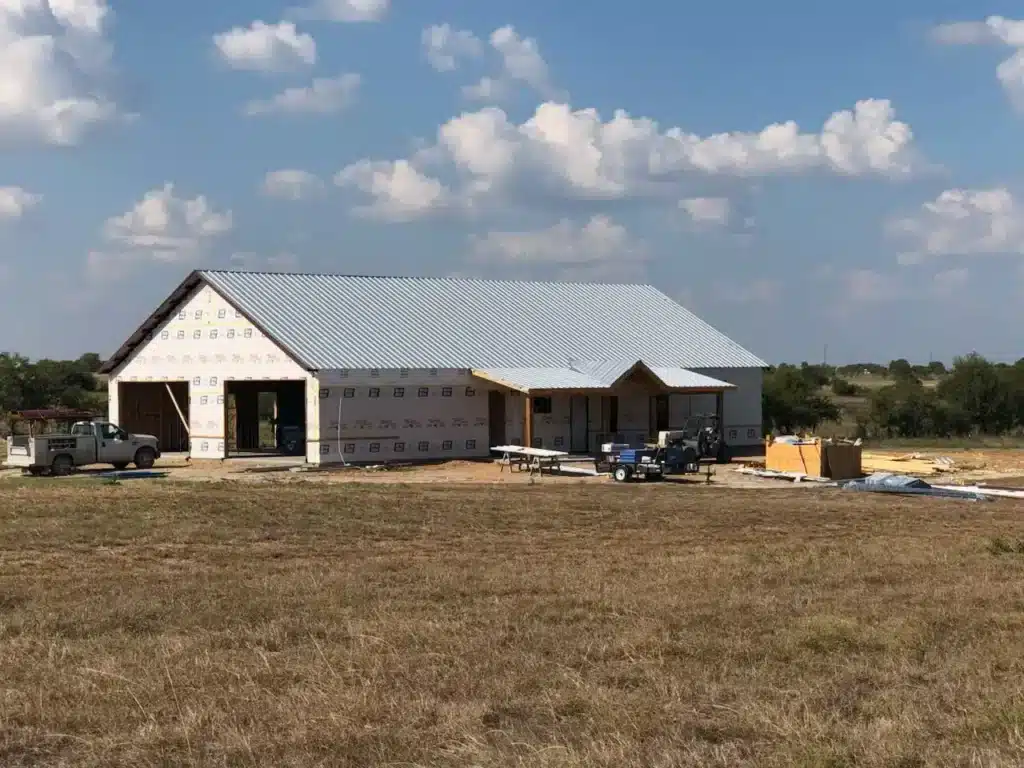
Understanding Texas land regulations, ETJs and permitting requirements is essential for successful barndominium construction. The state’s approach differs significantly from other regions and varies considerably between jurisdictions.
County-by-county differences
Texas has 254 counties, each with authority to establish building codes and permitting requirements for unincorporated areas. Some counties have adopted the International Residential Code with local amendments. Others have minimal building regulations beyond basic health and safety requirements.
Counties near major metros (Travis, Williamson, Collin, Denton, Fort Bend) typically have more stringent requirements: detailed plan reviews, multiple inspections, and stricter setback and environmental regulations. Our turnkey barndominium team in Austin, TX navigates these specific Travis County requirements regularly. Rural counties often have simpler processes with fewer inspections.
Some counties require permits for all structures. Others only require permits for buildings exceeding certain square footage thresholds or for structures with residential occupancy. You must verify requirements with your specific county before beginning design work.
Rural land considerations
Unincorporated Texas land offers flexibility that’s impossible in city limits or subdivisions. Setback requirements are generally minimal – often just 50 to 100 feet from property lines, though this varies by county.
Deed restrictions on rural land are less common than in subdivisions, but they exist. Always review deed records for restrictions on building types, uses, or architectural requirements before purchasing land for a barndominium.
Agricultural exemptions affect property taxes but don’t directly impact building permissions. However, maintaining agricultural exemptions while building a barndominium requires understanding Texas ag exemption rules and continuing qualifying agricultural use.
Utilities, septic systems, and wells
Rural Texas properties rarely have city water or sewer service. You’ll install a private well for water and a septic system for wastewater treatment.
Well costs depend on required depth. Most residential wells in Texas range from 100 to 400 feet deep, costing $15,000 to $35,000 including pump systems and pressure tanks. Some areas require much deeper wells, increasing costs substantially.
Septic systems require county health department permits based on percolation tests and soil evaluations. Conventional systems cost $8,000 to $15,000 in favorable soil conditions. Sites with poor drainage, high water tables, or challenging soil may require aerobic treatment systems ($15,000-$25,000) or engineered solutions that cost even more.
Electrical service extensions from existing lines to your building site are billed per foot, typically $20 to $60 per foot depending on terrain and utility company requirements. Sites more than a quarter-mile from existing service can see electrical costs exceeding $30,000.
Learn everything about utilities in rural Texas and what to expect.
Why Texas construction experience matters
Builders familiar with Texas county processes know which jurisdictions require specific documentation, how long permit reviews typically take, and how to present plans for efficient approval. Whether working with experienced barndominium builders across Central Texas counties or barndominium builders in South Texas jurisdictions, this regional experience makes a measurable difference in project timelines.
They understand regional soil conditions – the expansive clays around Dallas-Fort Worth that require engineered foundations, the sandy soils in East Texas, the caliche in Central and West Texas – and design accordingly.
They maintain relationships with local well drillers, septic installers, and utility companies, coordinating these services efficiently rather than learning through trial and error on your project.
Find out what an ETJ is in Texas before buying a land.
Barndominium Financing in Texas
Financing a barndominium requires understanding construction lending and working with lenders familiar with non-traditional construction projects.
Construction-to-permanent loans
Traditional construction-to-perm loans involve two closings: one for the construction phase (a short-term loan with interest-only payments during construction) and a second closing that converts the construction loan to a permanent mortgage once the home is complete.
This approach requires paying closing costs twice and going through underwriting twice. Rate locks during construction can be problematic if construction extends beyond the lock period.
One-time close construction loans
One-time close loans streamline the process by combining construction financing and permanent financing into a single loan with one closing. You lock your rate at the beginning, pay closing costs once, and convert to a standard mortgage automatically when construction completes.
These loans typically require detailed plans, specifications, and a fixed-price construction contract from your builder. Lenders disburse funds in draws as construction progresses, based on inspection verifications that work has been completed.
Not all lenders offer one-time close loans for barndominiums. Some classify metal building homes as non-conforming construction and decline to finance them. Others have programs specifically designed for barndominium construction.
Pre-qualification importance
Get pre-qualified before purchasing land or committing to specific plans. Pre-qualification reveals:
- How much you can borrow based on your income, assets, and credit
- Required down payment percentage
- Whether your lender will finance a barndominium specifically
- What documentation they’ll need (plans, specs, builder credentials)
- Timeline expectations from application to closing
This information prevents you from designing a project beyond your financing capacity or purchasing land you can’t develop.
Why turnkey builders simplify financing
Lenders prefer working with established builders who provide comprehensive contracts, carry proper insurance, and have track records of completing projects on budget and schedule.
Turnkey barndominium builders in Texas that handle everything in-house – from design through construction -provide the documentation, accountability, and project certainty that lenders require. They submit complete draw packages, maintain insurance certificates, and work with lenders throughout the construction process.
Builders who only provide shells or who subcontract all work create complications in the lending process because responsibility is fragmented and documentation is harder to verify.
Engineering, Steel Framing, and Texas Weather
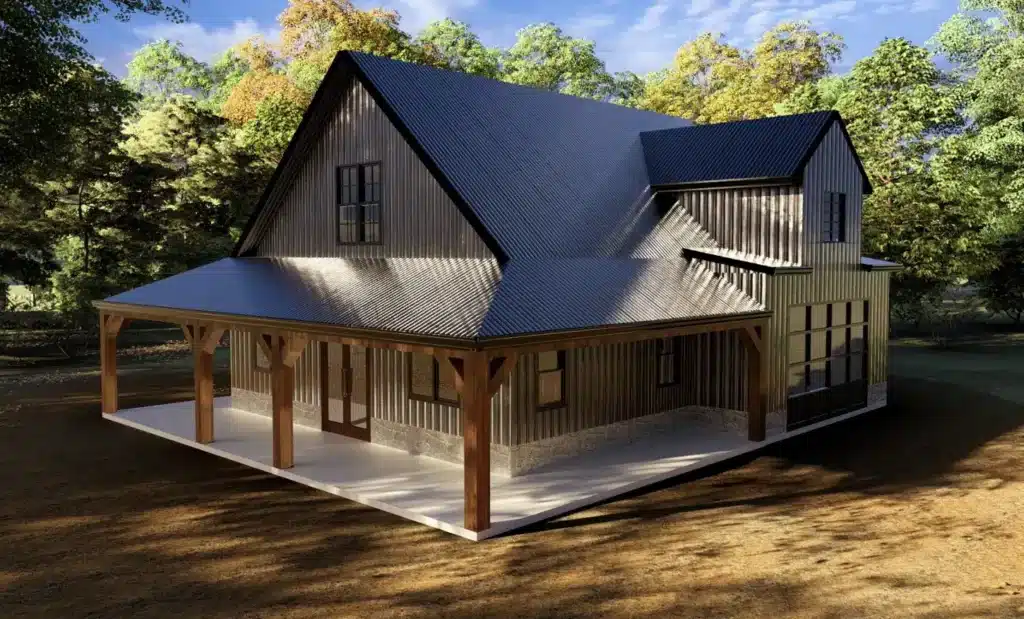
Barndominium engineering addresses the specific demands of Texas weather, soil conditions, and building codes. Understanding these requirements explains why proper engineering is critical and why experienced Texas builders deliver better long-term results.
Wind-load requirements
Texas building codes specify wind loads based on location and exposure. Most of Texas falls under 115 to 140 mph design wind speeds, with higher requirements in coastal counties where hurricane winds are possible. For example North Texas is prone to having tornadoes, so building a solid structure matters.
Engineers design connections between the steel frame and foundation to resist these wind forces. This includes anchor bolt sizing and spacing, base plate thickness, and column-to-beam connection specifications.
Roof panel attachment, trim securement, and door/window installations must all meet engineered specifications. Inadequate connections can lead to roof panel failures, trim damage, or structural problems during severe weather.
Soil-based foundation design
Texas soils vary dramatically. Expansive clays that shrink and swell with moisture changes dominate the Dallas-Fort Worth area and parts of Central Texas. These soils require foundations with deeper perimeter beams, often 24 inches or more, to resist soil movement.
Sandy soils in East Texas and coastal areas provide good drainage but may require different foundation approaches. Caliche and rocky soils in West Texas present excavation challenges but often provide excellent bearing capacity.
Engineers specify foundation designs based on geotechnical reports that identify soil type and bearing capacity. Foundations designed for one soil type can fail catastrophically in different conditions.
Steel versus wood framing considerations
Steel offers measurable advantages in Texas conditions:
- Termite immunity: Subterranean termites are active across Texas. Steel framing eliminates wood as a food source, removing the risk of structural damage from termite infestation.
- Dimensional stability: Wood expands and contracts with humidity changes, leading to drywall cracks, floor squeaks, and settlement issues. Steel maintains dimensional stability regardless of humidity.
- Span capacity: Steel I-beams can span distances impossible with dimensional lumber without intermediate support. This allows truly open floor plans and large unobstructed spaces.
- Fire resistance: Steel is non-combustible. While it loses strength at high temperatures, it doesn’t fuel fires the way wood framing does.
Wood framing offers advantages in some applications – easier attachment for finish materials, better insulation properties in wall cavities, and more flexibility for non-structural partition walls. Many barndominiums use steel for the primary structure and wood framing for interior partition walls.
Long-term durability expectations
Properly engineered and constructed barndominiums have service lives exceeding traditional wood-frame homes. Steel doesn’t rot, isn’t attacked by pests, and doesn’t weaken with age the way wood does.
The exterior metal panels, if maintained properly (keeping debris cleared from base trim, ensuring trim remains sealed), can last 40+ years before requiring replacement. Metal roofs routinely outlast asphalt shingles by 20 to 30 years.
Foundation durability depends on proper engineering for soil conditions and adequate drainage management. A well-designed foundation in appropriate soil should perform for the life of the structure.
Not sure where to start with your barndominium build?
Turnkey Barndominium Construction Explained
The term “turnkey” is used loosely in the construction industry. Understanding what it should mean helps you evaluate builders and make informed decisions.
What true turnkey construction includes
A genuinely turnkey project means you receive a completed, move-in-ready home from a single contractor who manages every aspect of construction. This includes:
- Architectural design and floor plan development
- Structural engineering stamped by a Texas PE
- Permit applications and inspections coordination
- Site preparation and foundation construction
- Metal building frame and exterior installation
- Complete electrical, plumbing, and HVAC systems
- Interior finishes: insulation, drywall, flooring, paint
- Kitchens with cabinets, countertops, and appliances
- Bathrooms with fixtures, tile, and accessories
- All trim, doors, and hardware installation
- Final inspections and certificate of occupancy
The defining characteristic of turnkey construction is single-source responsibility. You sign one contract with one company that employs or directly manages all trades working on your project.
What’s typically not included (and why)
Turnkey contracts typically exclude certain site-specific items because they vary dramatically between properties and can’t be standardized:
- Land purchase: You own or purchase the land separately.
- Well drilling and septic installation: These are site-specific, require separate permits, and are usually contracted directly with specialized companies.
- Utility service connection fees: Utility companies charge separate fees for new service installations.
- Landscaping and fencing: These are finishing touches typically completed after construction and based on personal preferences.
- Outbuildings and exterior structures: Shops not attached to the main building, barns, or equipment storage are often separate contracts.
Clarifying these exclusions in writing prevents misunderstandings and budget surprises.
Why one-contract, in-house systems matter
When you work with a barndominium builder in Texas that controls the entire process, accountability is clear. If something isn’t right, there’s no finger-pointing between the designer, engineer, framer, electrician, or finish carpenter. One company is responsible for making it right.
Scheduling becomes more efficient because one project manager coordinates all trades without competing priorities from other contractors’ jobs. Material ordering is streamlined because one purchasing system orders everything from foundation materials through finish hardware.
Communication improves because you have one point of contact throughout the project instead of managing relationships with five or ten different contractors, each with different communication styles and responsiveness.
Cost control is better because there are no markups between multiple layers of contractors and subcontractors. The turnkey builder’s estimating system prices the entire project, and their project management controls costs throughout construction.
Learn about energy efficiency for Texas barndominiums and what matters.
How Texas Complete Barndo Solutions Compares to Other Builders
Understanding different builder business models helps you evaluate your options and choose the approach that fits your needs and risk tolerance.
Shell-only builders
Some companies provide only the metal building shell – the steel frame, exterior panels, roof, doors, and windows. You take delivery of a weathered-in structure and separately contract for all interior work: electrical, plumbing, HVAC, insulation, drywall, flooring, and finishes.
This approach can reduce upfront costs but shifts substantial responsibility to you. You must hire and coordinate multiple contractors, manage scheduling between trades, handle inspections, and ensure all work meets code requirements.
The total cost often exceeds turnkey construction once you account for the coordination burden, potential scheduling delays, and the markup each separate contractor adds. Lenders are often hesitant to finance shell-only projects because completion risk is higher and responsibility is fragmented.
Metal building kit sellers
Kit companies manufacture and ship metal building components – framing, panels, trim, fasteners – directly to your site. You or your contractor assembles the building from these components.
Kits eliminate some manufacturing markup, but they require skilled labor for proper installation. Improperly installed metal buildings leak, develop structural issues, or fail to meet engineering specifications. You assume responsibility for engineering compliance and code adherence.
Financing kit projects is difficult because lenders can’t verify the kit manufacturer’s work quality through their normal inspection processes. You also handle all permitting, engineering, and construction coordination.
Outsourced general contractors
Some builders function as general contractors who design projects and then subcontract all actual construction work to independent trade contractors: separate companies for foundation, framing, electrical, plumbing, HVAC, drywall, and finishes.
This model can work well if the GC has strong relationships with reliable subcontractors and maintains tight project management. However, quality and scheduling depend on subcontractor availability and performance. When problems occur, resolving them requires coordinating between the GC and the responsible subcontractor.
Cost control can be challenging because subcontractors bid work months before they perform it, and price changes or change orders flow through the GC’s markup structure.
Integrated, in-house construction
Metal barndominium company in Texas that employ their own crews or maintain long-term exclusive relationships with trade contractors provide different advantages.
They control scheduling directly rather than competing for subcontractor availability. Quality standards are consistent because the same crews work on all projects using the company’s methods and specifications. Problem resolution is faster because everyone works for or directly with the same organization.
Project costs are more predictable because labor costs are known rather than bid, and material purchasing leverages volume relationships with suppliers. The company’s reputation depends on every aspect of every project, creating institutional incentive for quality work.
Texas Complete Barndo Solutions operates this way – maintaining direct control over design, engineering, and construction with 25+ years of institutional knowledge about building barndominiums in Texas conditions. Our teams operate across the state, including barndominium builders in East Texas delivering county-wide projects and North Texas barndominium builders supporting markets throughout the region.
Learn more about barndominium insurance in Texas and what matters.
Who Barndominiums Are Best For in Texas
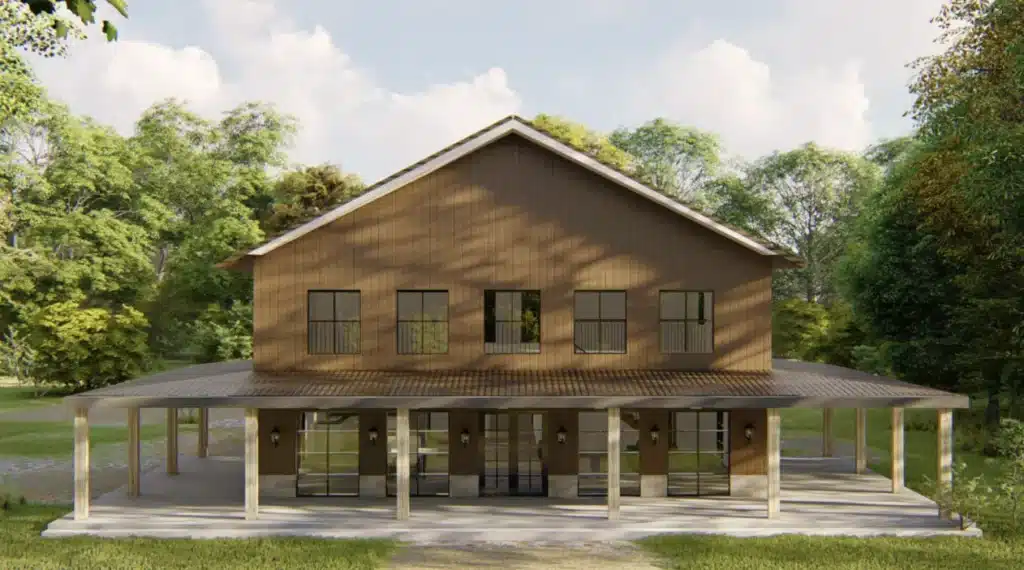
Barndominiums serve diverse needs, but certain buyer profiles benefit most from this construction approach.
Ranch and agricultural property owners
If you own or plan to buy land for livestock, horses, farming, or ranch operations, a barndominium integrates your residence with agricultural facilities. You can design living space with adjacent hay storage, equipment bays, or animal shelters under one roof or in connected structures.
This consolidation reduces construction costs compared to building a separate home and barn. It also simplifies property management – one structure to maintain, one foundation, one roof system.
Families seeking space and value
Young families and growing families benefit from the square footage efficiency barndominiums offer. The cost per square foot for quality construction is typically lower than comparable traditional homes, allowing you to build larger homes within the same budget.
Open floor plans accommodate family activities and gatherings. Attached shops provide storage for toys, equipment, and vehicles without needing separate outbuildings. Growing families appreciate the ability to finish space in phases – building the shell and basic living areas first, then finishing additional bedrooms or flex spaces as budget and needs evolve.
Retirees and downsizers
Retirees moving from larger traditional homes to smaller footprints still need space for accumulated belongings, hobbies, and equipment. Barndominiums allow downsizing living space without sacrificing storage or workshop areas.
Single-level floor plans eliminate stairs, improving accessibility and aging-in-place potential. Metal construction reduces maintenance demands – no painting, minimal exterior repairs, and long-lasting roofing systems.
Many retirees build barndominiums on land they’ve owned for years, finally developing property as a retirement home with room for recreational vehicles, workshop hobbies, or visiting family.
Investors and rental property developers
Barndominium construction costs and durability make them attractive for rental property investment. The lower cost per square foot improves return on investment calculations. Minimal maintenance requirements reduce ongoing ownership costs.
Short-term rental markets (vacation properties) have shown strong demand for barndominiums, particularly those with distinctive designs and rural settings. Long-term rental markets appreciate the durability and low maintenance of metal construction.
First-time land buyers
Buyers purchasing their first rural property often choose barndominiums because they maximize what you get for your construction budget. You can afford to build on land you own outright rather than taking on land debt plus construction debt.
The versatility appeals to people unsure exactly how they’ll use their property long-term. Starting with a barndominium provides immediate functional space that can adapt as needs change – today’s workshop becomes tomorrow’s home gym, office, or guest suite.
Build Your Texas Barndominium With Confidence
Texas offers unique opportunities for barndominium construction – affordable land, favorable building environments, and a regulatory landscape that accommodates metal building homes. Taking advantage of these opportunities requires understanding the construction process, realistic budgeting, and working with builders who have deep Texas-specific experience.
The decisions you make about design, land selection, engineering, and builder choice directly impact your project’s cost, timeline, and long-term satisfaction. Rushing into construction without thoroughly understanding these factors leads to budget overruns, timeline delays, and compromised quality.
Texas Complete Barndo Solutions has built barndominiums across the state for over 25 years. We handle every aspect of the process in-house – from initial design through final inspections – giving you single-source accountability and streamlined project management.
If you’re serious about building a barndominium in Texas, schedule a consultation to discuss your specific project. We’ll review your goals, budget, and timeline, evaluate your land or help you identify suitable properties, and provide detailed guidance on what your project would entail.
Contact our team to start the conversation about your Texas barndominium project.
Frequently Asked Questions
How long does it take to build a barndominium in Texas?
From the day you sign a construction contract to move-in typically takes 6 to 9 months for turnkey projects. This includes design finalization (4-6 weeks), engineering and permitting (4-8 weeks, varying significantly by county), and construction (4-6 months). Sites requiring extensive land preparation, complex designs, or delayed material deliveries can extend timelines. Rural locations with limited contractor availability may also take longer.
Are barndominiums safe in tornadoes and hurricanes?
Properly engineered barndominiums designed for Texas wind loads offer good severe weather protection. Steel framing anchored to engineered foundations resists high winds better than many wood-frame homes. However, no above-ground structure is tornado-proof. The open floor plans common in barndominiums require careful attention to safe room design if tornado protection is a priority – interior bathrooms or closets with reinforced walls and ceilings provide refuge areas. Coastal barndominiums must be engineered for hurricane wind loads and potential storm surge, which may require elevated foundations in flood-prone areas.
Do barndominiums have resale value issues?
Resale values depend heavily on location and market conditions. In rural Texas markets where barndominiums are common and accepted, they sell comparably to traditional homes of similar size and finish quality. In suburban or urban markets where they’re less common, buyer pools may be smaller. Quality of construction, finish level, and property characteristics (land size, location, utilities) affect value more than the structure type. Well-built barndominiums on desirable land hold value well. Poorly constructed ones or those in inappropriate locations may face resale challenges.
Can I insure a barndominium like a regular house?
Yes. Standard homeowners insurance policies cover barndominiums. Some insurance companies have more experience with metal building homes than others, so shopping multiple providers is worthwhile. Insurance costs are typically comparable to traditional homes of the same value, though this varies by insurer and location. Companies may inspect the property before binding coverage to verify construction quality and fire protection (especially important for rural locations far from fire departments). Providing engineered plans and building permits during the insurance application process helps demonstrate the structure meets code requirements.
Can I build a barndominium on raw land with no utilities?
Yes. Many Texas barndominiums are built on undeveloped rural land. You’ll need to install a well for water, septic system for wastewater, and arrange electrical service extension from the nearest utility connection point. These site development costs can add $30,000 to $80,000+ to your project budget depending on distance from utilities and site conditions. Propane tanks provide fuel for heating, cooking, and hot water where natural gas lines aren’t available. Building on raw land requires more upfront planning and budget allocation but offers maximum privacy and property control.