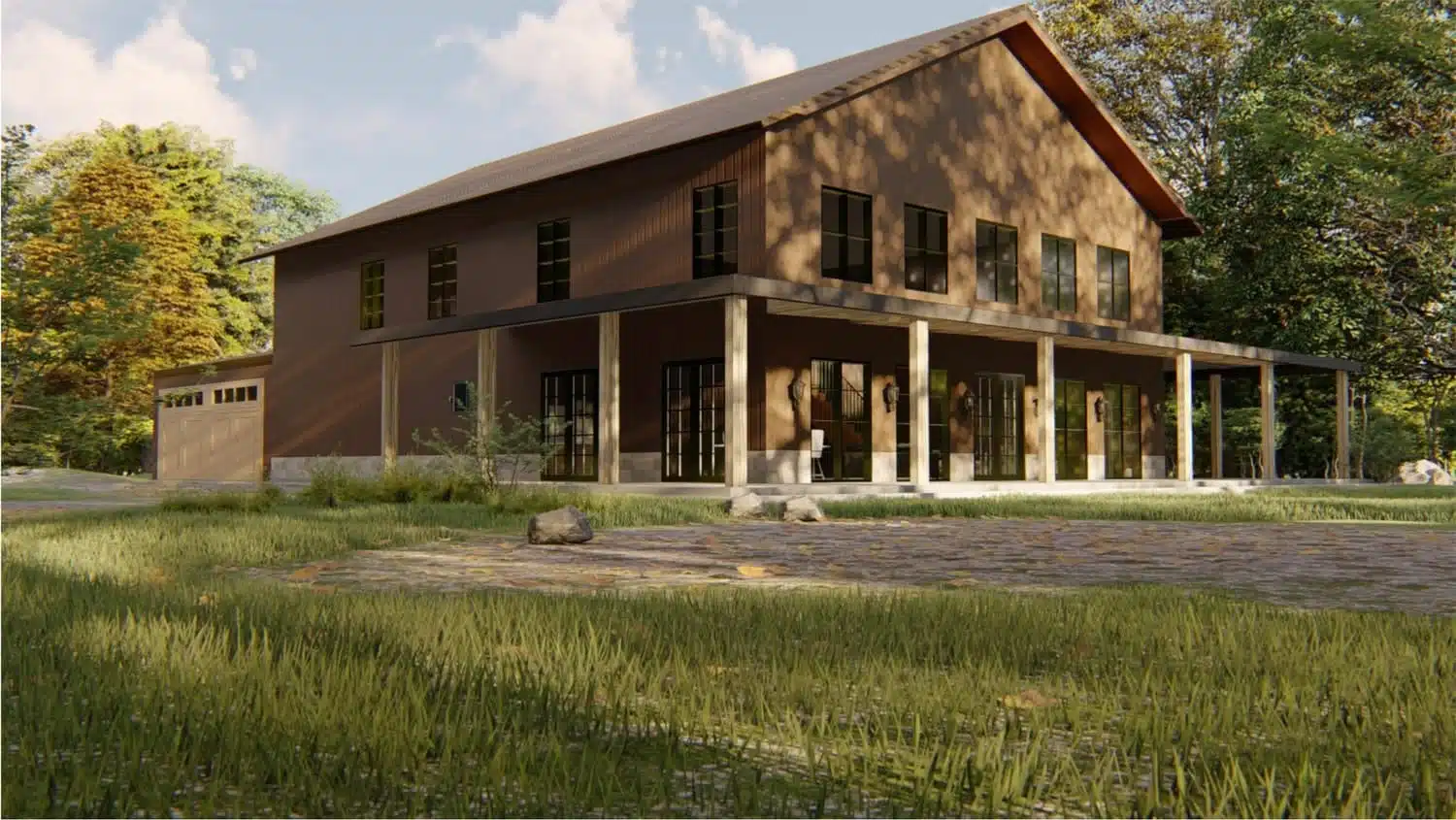
If you’re planning to build a barndominium in Texas, one of the first and most important questions is whether you can legally build it on the land you’re considering. The answer is not automatically yes – and it is not automatically no either. It depends on where the property is located and which authority has jurisdiction over it.
In Texas, the rules change significantly between rural counties, incorporated cities, and ETJ areas. Understanding that difference before you buy land or finalize plans can save you months of delays, redesign costs, and permit issues. Here is how it actually works from a construction standpoint.
How Building Regulation Works in Texas
Texas operates differently than many other states when it comes to land use control. There is no single statewide zoning system governing residential construction. Instead, authority is divided between counties and cities, and their powers are not the same.
Most Texas counties do not have formal zoning authority. That means they generally cannot dictate whether land must be residential, agricultural, or commercial. However, that does not mean there are no rules. Counties still regulate construction through health, safety, infrastructure, and subdivision standards.
In rural areas across East Texas, North Texas, and large parts of Central Texas, this limited zoning power makes barndominiums far more feasible than in heavily regulated metro areas.
What Counties Typically Regulate
Even without zoning, counties commonly enforce:
- Septic system approval through TCEQ or county authority
- Floodplain management
- Subdivision platting requirements
- Road access and driveway permits
- Setback requirements in certain subdivisions
If you are building on acreage outside city limits, these are usually the primary regulatory hurdles.
Building Inside Texas City Limits
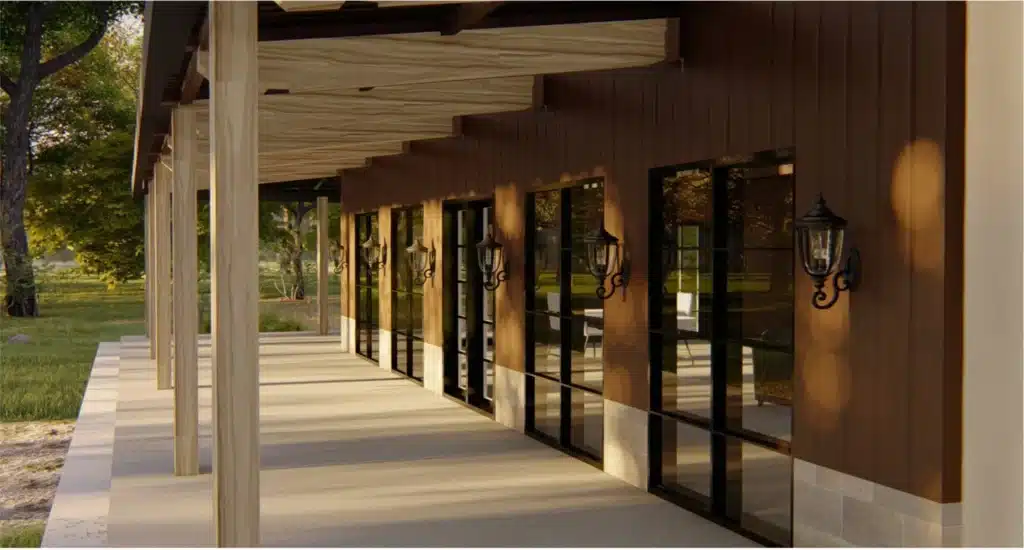
Once a property sits inside city limits, the regulatory structure changes entirely. Cities in Texas have full zoning authority and enforce detailed building codes, development standards, and architectural controls.
In cities such as Austin Texas and Dallas Texas, residential construction must comply with:
- Zoning classifications
- Minimum lot size requirements
- Setback regulations
- Height restrictions
- Exterior material requirements
- Energy code compliance
- Full architectural plan review
Some cities allow metal-clad residences without issue. Others require masonry percentages or restrict certain exterior finishes. The structure must also pass multiple inspection phases before a Certificate of Occupancy is issued.
This is where working with a Barndominium Contractor Texas homeowners trust becomes critical. Municipal plan review can delay projects if drawings are not prepared correctly the first time.
Understanding ETJ – Extra Territorial Jurisdiction
An ETJ, or Extra Territorial Jurisdiction, is land outside city limits but still partially controlled by a city. This is common around fast-growing metro areas, including regions near Midland Texas and expanding corridors in South Texas.
In an ETJ:
- You may not face full zoning restrictions
- But subdivision platting rules often apply
- Road standards may be enforced
- Drainage and infrastructure review may be required
The key issue is determining who controls what. In some cases, the county handles building permits while the city controls subdivision approval. Before purchasing land in an ETJ, you need written clarification of jurisdiction.
Want To Speak To an Expert Barndominium Builder in Texas?
Deed Restrictions – The Most Overlooked Barrier
In Texas, private deed restrictions stop more barndominium projects than government regulations do.
Even in counties without zoning, subdivisions can impose:
- Minimum square footage requirements
- Exterior masonry percentage rules
- Prohibitions on metal siding
- Shop size limitations
- Architectural committee approval
A property can be perfectly legal from a county standpoint and still prohibit a metal barndominium because of recorded restrictions.
Before closing on land, you should review:
- The title commitment
- Recorded deed restrictions
- HOA guidelines if applicable
Our land selection & evaluation process includes this review so buyers do not discover limitations after purchasing property.
Are Barndominiums Recognized as Legal Residences in Texas?
Yes – when they are properly engineered and permitted.
A barndominium built as a residence must comply with:
- The International Residential Code
- Local amendments to the IRC
- Texas energy code requirements
- Engineered foundation design
- Region-specific wind load calculations
In high-wind areas across North Texas and coastal South Texas, structural engineering is especially important. The building must be designed to meet the required wind exposure category and uplift resistance standards.
A properly engineered structure built by a licensed Metal barndominium construction company in Texas meets the same residential standards as a traditional stick-built home.
Rural Texas – Why It Is Often More Flexible
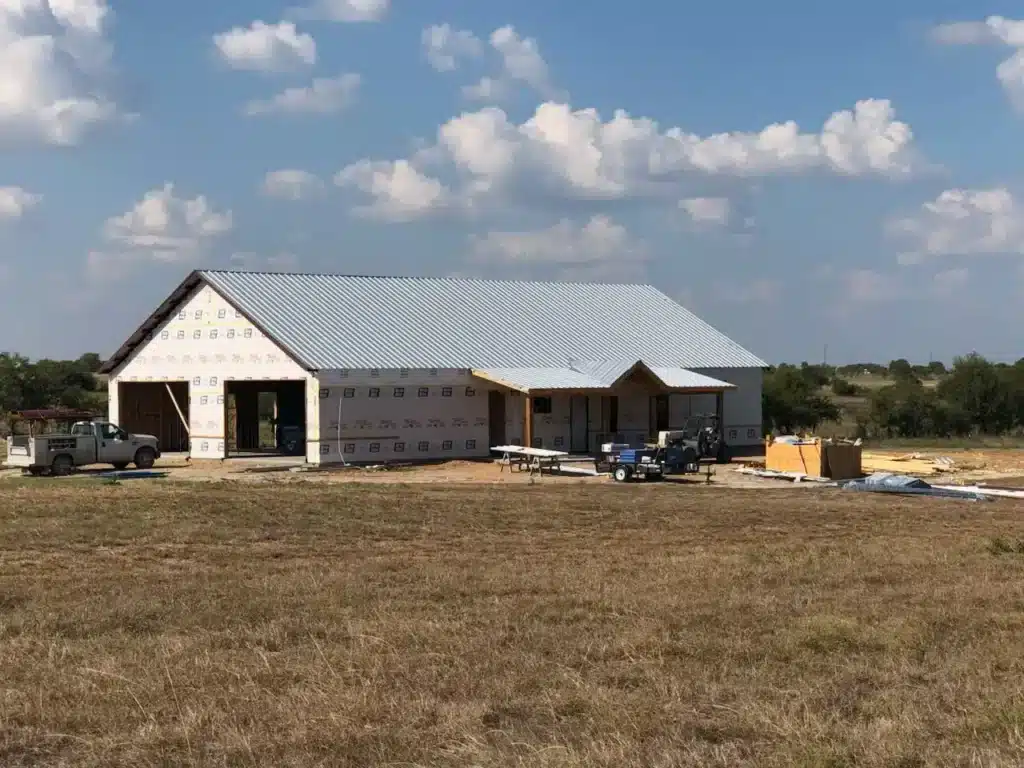
In unincorporated areas across East, Central, and West Texas, building approval is generally more straightforward.
You will typically need:
- Septic approval
- Floodplain determination
- Engineered foundation
- Structural plans
- Electrical coordination
There is usually no design review board dictating siding material or roof style unless deed restrictions exist. This flexibility is one reason rural Texas remains highly favorable for barndominium construction.
City vs County – What Really Changes
Here is how rural and city builds typically compare:
| Factor | Rural County | City Limits |
|---|---|---|
| Zoning | Usually none | Required |
| Exterior Restrictions | Rare unless deed restricted | Common |
| Permit Complexity | Moderate | High |
| Plan Review | Limited | Detailed architectural review |
| Inspections | Standard | Multiple phased inspections |
| Timeline | Shorter | Longer |
The structure itself is not usually the issue. Compliance with jurisdictional rules is.
Wind Load and Regional Engineering Requirements
Texas has significant variation in wind exposure and weather patterns.
- Coastal regions require higher wind ratings
- West Texas experiences sustained high winds
- North Texas sees tornado exposure
- Central Texas has moderate but still regulated wind requirements
Structural engineering must account for:
- Anchor bolt spacing
- Roof uplift resistance
- Shear wall strength
- Proper bracing design
Engineering must be site-specific. Using generic plans without regional adjustment can result in permit denial.
Building on Agricultural Land in Texas
Agricultural exemptions affect taxation, not your right to build a residence.
In most counties, you can build a barndominium on agricultural land. However:
- The residential portion may remove part of the ag exemption
- Septic and access requirements still apply
- Floodplain restrictions still apply
Tax planning should be part of early project evaluation.
Minimum Acreage Requirements
Texas does not impose a statewide minimum acreage requirement to build a home. Restrictions usually come from:
- Subdivision covenants
- City zoning ordinances
- Septic feasibility
The determining factor is almost always subdivision rules or soil suitability, not state law.
Living in a Shop House – Is It Allowed?
In most rural counties, living in a properly permitted shop house is allowed.
Inside city limits, it is often restricted or prohibited. Cities typically require:
- Proper residential classification
- Certificate of Occupancy before habitation
- Full compliance with residential code
Attempting to occupy a non-permitted shop structure is one of the fastest ways to create legal and financing problems.
Permits You Will Typically Need
For rural builds:
- Septic permit
- Floodplain review if applicable
- Driveway permit in some counties
- Engineered structural plans
For city builds:
- Zoning approval
- Architectural review
- Energy compliance documentation
- Multiple inspections
- Certificate of Occupancy
Working with a turnkey barndominium builder in Texas streamlines this because engineering, permitting, and construction are coordinated under one process.
Planning a barndominium in Texas?
Financing Considerations Based on Location
Location affects financing in several ways:
- Rural appraisals depend on comparable sales
- Engineered structures are easier to finance
- Construction-to-permanent loans require detailed plans
- Lenders evaluate whether the structure meets residential standards
Our financing guidance for barndominiums helps structure projects properly before construction begins.
What Actually Prevents Approval in Texas?
Common issues include:
- Deed restrictions prohibiting metal exteriors
- HOA denial
- Floodplain construction without elevation planning
- Attempting to occupy non-permitted structures
- Subdivision masonry requirements
- Purchasing land before verifying ETJ authority
Every one of these problems can be identified before construction begins.
The Correct Way to Approach a Texas Barndominium Project
Before purchasing land:
- Confirm jurisdiction
- Review deed restrictions
- Verify septic feasibility
- Confirm floodplain status
- Identify wind load requirements
Before finalizing design:
- Confirm exterior material compliance
- Verify shop size allowances
- Ensure engineering matches local standards
Our Barndominium floor plans & design services are built around compliance with local Texas requirements, not generic drawings that may fail plan review.
Conclusion – Can You Build Anywhere in Texas?
Not everywhere.
But in most areas of Texas, yes – with proper planning and due diligence.
Rural counties are generally flexible. Cities require structured compliance. ETJs require clarity. Deed restrictions require careful review.
If you are evaluating land or comparing builders, get guidance on your Texas barndominium project before you commit. The difference between a smooth build and a stalled project usually comes down to early jurisdiction review and experienced construction planning.
Curious about the complete building process in Texas? Check our complete guide to building a barndo in Texas.
Frequently Asked Questions
1. Do all Texas counties allow barndominiums?
Most Texas counties allow barndominiums because counties generally do not have zoning authority. However, counties still enforce septic rules, floodplain regulations, subdivision requirements, and building safety codes. In some cases, private deed restrictions or HOAs can prohibit metal buildings even when the county allows residential construction.
2. Can a city legally stop me from building a barndominium?
Yes. Cities in Texas have full zoning and building code authority. A city can restrict barndominiums through zoning classifications, exterior material requirements, minimum masonry rules, or architectural standards. This does not mean barndominiums are banned, but the design may need to be modified to meet city code.
3. What is the difference between county land and ETJ land in Texas?
County land outside city limits is regulated primarily by the county. ETJ land is outside city limits but still subject to certain city controls, usually related to subdivision platting, road access, and infrastructure standards. Building approval authority can vary, so jurisdiction must be confirmed before purchasing land.
4. Are metal barndominiums harder to permit or finance in Texas?
When properly engineered, metal barndominiums are not harder to permit or finance than traditional homes. Problems typically arise when plans are not engineered for local wind loads, foundations are not code-compliant, or the structure is classified as a shop instead of a residence. Lenders and inspectors focus on compliance, not the building material.
5. What is the biggest mistake people make when planning a Texas barndominium?
The most common mistake is buying land before verifying deed restrictions, jurisdiction, and septic feasibility. Many projects are delayed or stopped because these issues were not identified early. Proper land evaluation and code review should always happen before closing on property or finalizing design plans.