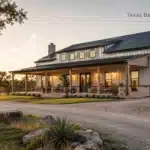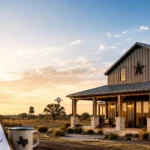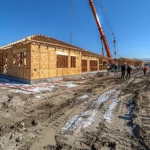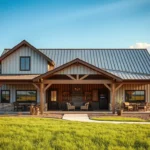
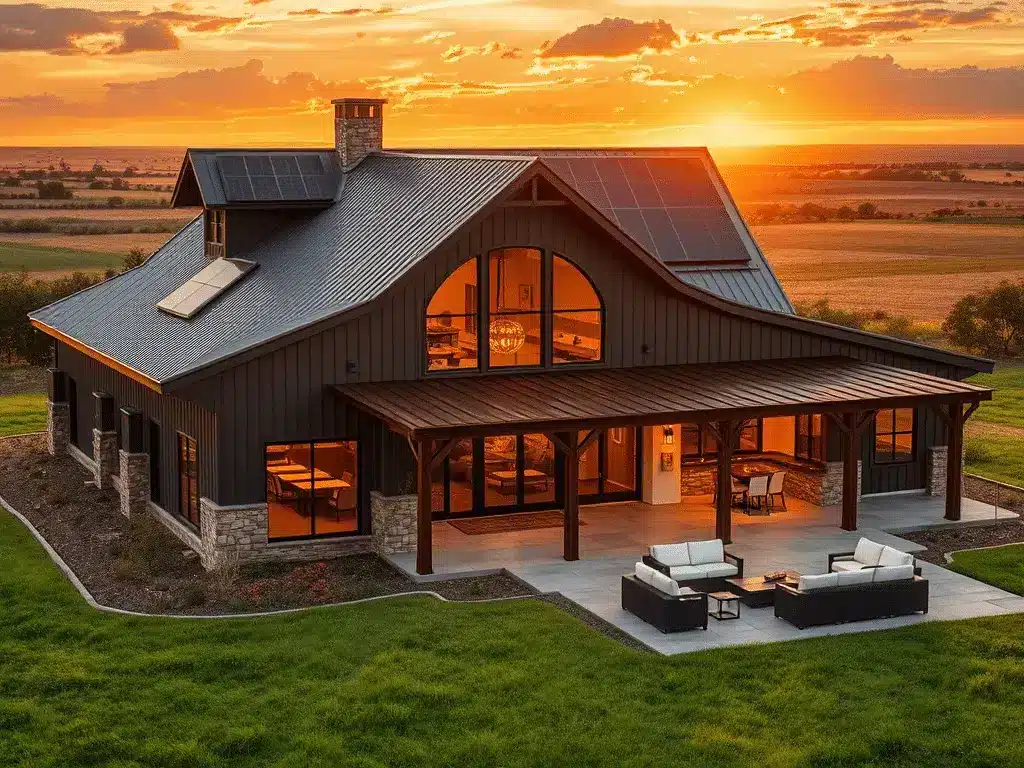
Building a barndominium in North Texas is not just about choosing a floor plan and putting up a structure. The region brings a very specific set of challenges: severe storms, large hail, high wind events, and highly reactive clay soils. If these are not addressed properly at the design and engineering stage, they will show up later as structural issues, water intrusion, or long-term maintenance problems.
This guide walks through what actually matters when designing and building a barndominium in North Texas, from soil movement and foundation design to roofing systems and wind load requirements, based on how projects are executed on the ground.
Understanding North Texas Conditions Before You Build
North Texas spans areas like Dallas-Fort Worth, Denton County, Collin County, and surrounding rural regions. While the terrain may look straightforward, the subsurface and weather patterns tell a different story.
The Three Big Factors That Drive Design
- Expansive clay soils
- Severe storm systems including wind and tornado risk
- Frequent large hail events
These are not occasional concerns. They are design drivers. Every decision, from foundation depth to roof pitch, should account for them.
If you’re early in the process, it is worth reviewing broader considerations in the complete guide to building a barndominium in Texas to understand how regional factors shape the entire project.
Expansive Clay Soil: The Foundation Challenge
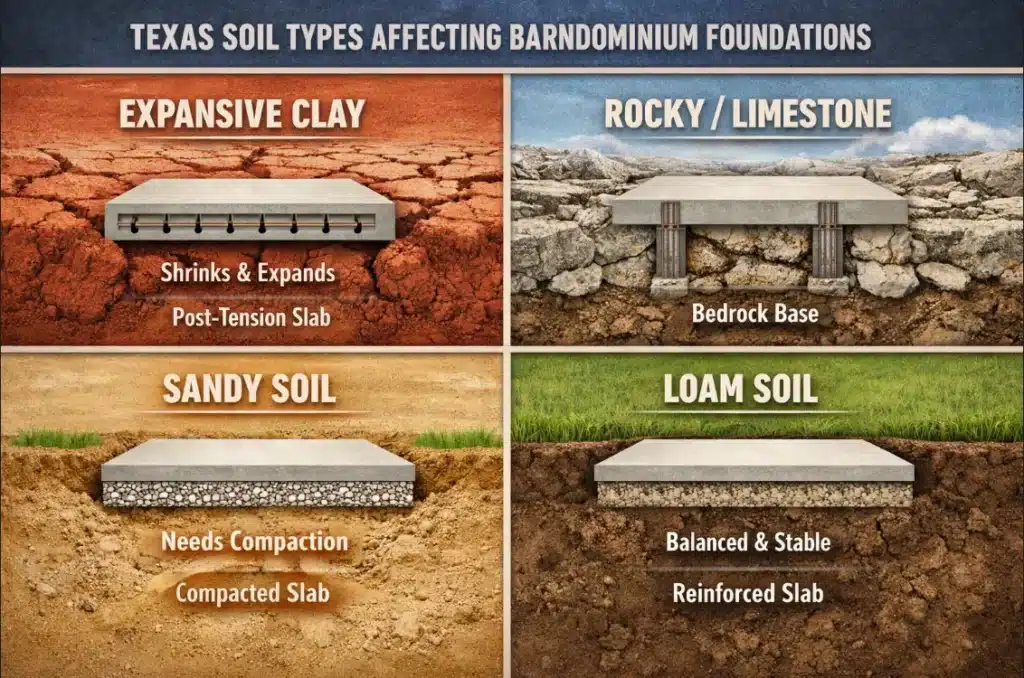
North Texas is known for its highly expansive clay soils. These soils shrink during dry periods and swell when moisture increases. That constant movement creates stress on foundations.
What Happens If You Ignore It?
- Cracked slabs
- Misaligned doors and windows
- Plumbing line damage
- Long-term structural shifting
This is one of the most common issues seen in poorly designed builds across the region.
Proper Foundation Solutions for Barndominiums
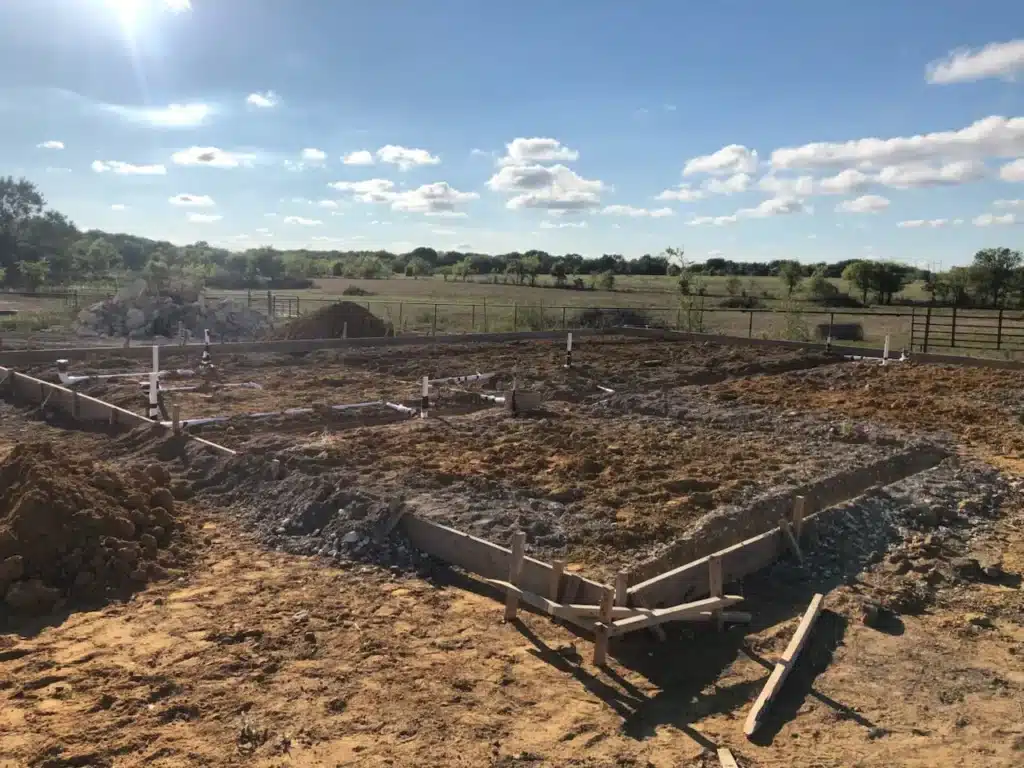
For barndominiums in North Texas, foundation design must be engineered specifically for soil conditions. That starts with a geotechnical soil test, which is not optional.
Common solutions include:
Post-Tension Slabs
- Reinforced with tensioned cables
- Designed to flex with soil movement
- Common in residential builds across DFW
Pier and Beam or Drilled Piers
- Transfers load deeper below active soil layers
- Often used in areas with extreme soil movement
Engineered Slab-on-Grade With Soil Preparation
- Includes moisture conditioning and select fill
- Requires precise compaction and drainage planning
The key is not choosing a type of foundation. It is engineering the right one for your specific lot. That is where early-stage land selection and site evaluation support becomes critical, especially in rural North Texas properties where soil variability is high.
Storm and Wind Design: More Than Code Minimums
North Texas regularly experiences severe thunderstorms, straight-line winds, and tornado activity. Building codes define minimum requirements, but they do not always reflect best practices for long-term durability.
Wind Load Considerations
Most North Texas counties fall within wind design speeds of 115 to 130 mph, depending on exact location and exposure.
Key structural elements that must be engineered correctly:
- Anchor bolts and foundation connections
- Steel frame or post-frame load paths
- Roof-to-wall connections
- Bracing systems
A properly designed metal barndominium structure performs very well under wind loads, but only if the connections and load transfer paths are engineered as a complete system.
Working with a metal barndominium construction company in Texas that understands these structural requirements ensures the building performs as intended during extreme events.
Hail Resistance: Roofing and Exterior Materials Matter
North Texas is one of the most hail-prone regions in the United States. It is not uncommon to see hailstones exceeding 2 inches in diameter during peak storm seasons.
Roofing Choices That Hold Up
Standing Seam Metal Roofs
- Strong long-term durability
- Fewer exposed fasteners, which reduces leak risk
- Higher upfront cost, but lower maintenance over time
Exposed Fastener Metal Roofs
- More cost-effective
- Requires proper installation and maintenance
- Fastener inspection is critical over time
Impact Ratings
Look for materials with Class 4 impact resistance ratings. This is the highest rating available and can significantly reduce damage during hailstorms.
Siding Considerations
- Steel siding performs better than traditional materials under hail impact
- Proper gauge thickness matters
- Paint systems should be rated for UV and weather resistance
Material selection is not just about appearance. It is about performance over decades in North Texas conditions.
Want To Speak To a Certified Barndominium Builder in North Texas?
Drainage and Water Management
Water is one of the most underestimated risks in barndominium construction, especially when combined with expansive soils.
Why Drainage Is Critical
- Poor drainage accelerates soil movement
- Water pooling near foundations increases structural stress
- Improper grading leads to long-term foundation issues
Key Design Elements
- Positive grading away from the structure
- French drains or surface drainage systems where needed
- Gutters and downspouts routed away from the foundation
- Elevation planning based on site conditions
If your property falls within or near mapped flood areas, reviewing flood zones across Texas is essential before finalizing your build location.
Rural vs. City Builds in North Texas
Where you build in North Texas significantly impacts your design and approval process.
Building in Rural Areas
- Fewer zoning restrictions
- More flexibility in structure type
- Septic systems are often required
- Well water versus municipal water
Building Near Cities
- More permitting requirements
- Architectural or zoning constraints
- Easier access to utilities
- Possible HOA restrictions
Understanding jurisdiction boundaries is critical. Many properties fall within ETJ zones, which have their own rules. If you are unfamiliar, it is worth learning what an ETJ is and how it affects building before purchasing land.
Designing the Right Barndominium for North Texas
The best barndominiums in North Texas are not just structurally sound. They are designed with the environment in mind.
Layout Considerations
- Orienting the building to reduce wind exposure
- Covered porches for weather protection
- Mudrooms or transition spaces for rural properties
Roof Design
- Steeper pitches improve water runoff
- Overhangs protect siding and foundation
- Proper ventilation reduces heat load in Texas summers
Interior Planning
North Texas climate swings from hot summers to cold snaps. Insulation and HVAC design must reflect that.
- Spray foam insulation for energy efficiency
- Zoned HVAC systems for larger floor plans
- Moisture control to prevent condensation in metal structures
Choosing the right layout early on is key. Reviewing options like barndominium floor plans for Texas helps align design with real-world use.
The Importance of a Turnkey Approach
Barndominium projects in North Texas involve multiple moving parts:
- Land evaluation
- Soil testing
- Engineering
- Permitting
- Construction
- Utilities
Managing these separately often leads to gaps, especially when dealing with regional challenges like soil movement or storm design.
Working with North Texas barndominium builders ensures that every phase, from foundation engineering to final construction, is aligned from day one.
If you are still evaluating options, speaking with an experienced turnkey barndominium builder in Texas can clarify what is realistically required for your specific property.
We Can Help With Financing Advice and Land Selection
Financing and Planning for North Texas Builds
Barndominiums require a slightly different financing approach than traditional homes, especially when building on rural land.
- Construction-to-permanent loans are common
- Lenders may require engineered plans upfront
- Appraisals depend heavily on comparable properties
Getting early guidance through barndominium financing support in Texas helps avoid delays once construction is ready to begin.
Final Thoughts: Build for the Region, Not Just the Design
North Texas is one of the best places to build a barndominium, but only if it is designed for the realities of the environment.
The biggest mistakes happen when buyers focus only on the structure itself and overlook:
- Soil behavior
- Drainage
- Wind and storm exposure
- Material performance over time
A well-built barndominium in North Texas should feel solid, low maintenance, and resilient regardless of weather conditions.
If you are planning a project, get guidance early, especially before purchasing land or finalizing plans. A short conversation with a Texas barndominium expert can prevent costly adjustments later and set the project up for long-term success.
Frequently Asked Question
Do barndominiums hold up well in North Texas storms?
Yes, when properly engineered. Metal barndominiums can perform very well in high winds and severe storms. The key is correct structural design, including load paths, anchoring, and bracing. Poorly designed structures are where problems occur.
What is the best foundation for expansive clay in North Texas?
There is no one-size-fits-all answer. Post-tension slabs are common, but some properties require drilled piers or specialized engineered slabs. A soil test is the only way to determine the right foundation for your land.
How do you protect a barndominium from hail damage?
Use Class 4 impact-rated roofing materials and durable steel siding. Standing seam metal roofs tend to perform better over time because they have fewer exposed fasteners and lower leak risk.
Is it harder to build a barndominium in rural North Texas?
It can be simpler in terms of zoning, but more complex in terms of infrastructure. You may need septic systems, well water, and additional site work. Early planning and proper site evaluation are critical.
When should I involve a builder in the process?
As early as possible, ideally before purchasing land. A builder can help evaluate soil conditions, drainage, utilities, and build feasibility so you avoid costly surprises later.